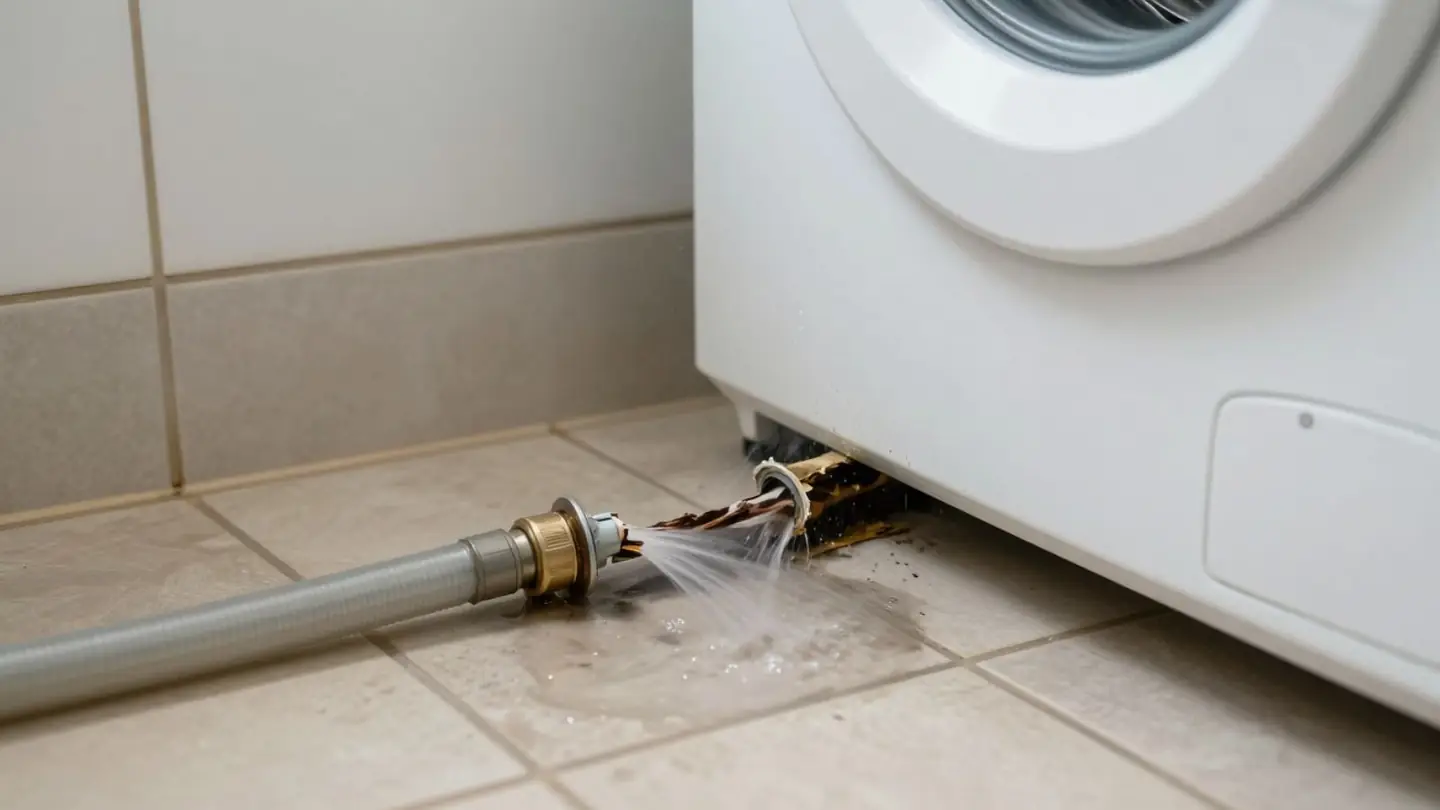
The laundry room floor is soft near the washer, or the hallway carpet is damp and nobody spilled anything. Appliance leak water damage in The Colony, TX is the harm done to floors, walls and framing when a washing machine, dishwasher or refrigerator line lets water escape, often slowly and out of sight.
This page is about the appliance side: the hose, the valve, the pan and how to stop the leak from happening again. For what the water did to cabinets and flooring in the room itself, see our kitchen water damage page.
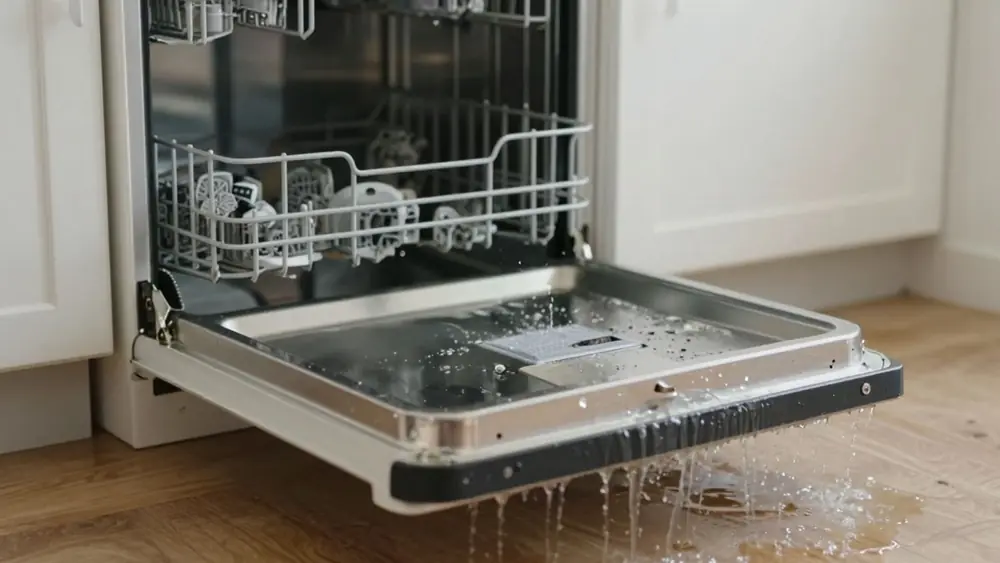
Why appliance leaks run for days before anyone sees them
Appliances sit against walls, in closets and in alcoves. The hose connections are behind the machine and the valves are in a recess. A drip from a fitting can land on a floor you never look at.
A washer in an upstairs laundry room sends water through the floor into the ceiling below. By the time a stain appears, the subfloor and the insulation above the ceiling board may have been wet for a long time.
Dishwashers and refrigerators hide leaks just as well. The refrigerator ice maker line runs behind the unit and drips into the floor. A cracked drain pan or a clogged laundry drain overflows only when the machine drains, so the problem comes and goes.
Talk to dispatch
Describe what you see and we will tell you what happens next, in plain words, before any work starts.
How to tell an appliance is leaking
Look for the quiet clues first. A floor that feels slightly spongy, a baseboard that has begun to swell and a musty smell near the appliance all point to moisture.
- Run a meter test: turn off every tap and appliance, then watch the water meter. If the dial or low flow indicator keeps moving, water is escaping somewhere.
- Pull the washer or fridge out a few inches and check the wall behind it and the floor under it with a flashlight.
- Feel the hose connections for dampness and look for mineral crust or rust at the fitting.
- Check the ceiling below an upstairs laundry room for a brown ring or a bubble in the paint.
- Look in the drain pan, if your machine has one, for standing water.
What The Colony homes and the city add to this
The city's water quality report says The Colony Water Utility draws on five city wells and also buys treated surface water from Dallas Water Utilities. A hose on a washer is under full line pressure whenever the valve is open, so closing the valve when you leave is a sensible habit for a long trip.
Many appliance leaks happen in rentals, since Census QuickFacts puts owner occupancy at 59.8 percent. If a rented washer or dishwasher leaks, send the landlord or property manager a written notice right away. Delays can cost you under the lease or your renters policy.
The Texas Department of Insurance names a broken washing machine hose as an example of sudden and accidental water damage. It also says hidden damage should be reported within days of first seeing it, and policy deadlines vary, so read yours soon after you find the leak.
Appliance leak safety: the first hour
Washers, dryers and refrigerators all run on mains power, and the floor around them is often wet.
- Turn the appliance supply valve clockwise until it stops. A washer has two, hot and cold.
- If the valve will not close, shut the main water valve for the house.
- Mop up what you can and lift anything porous off the floor.
- Photograph the leak source, the damage and the appliance label before moving them.
- Keep the failed hose or part for the adjuster and the plumber.
- Call the dispatch line and describe where the water traveled.
Water and appliance power
Do not touch a plugged-in appliance while standing in water. If water is near the breaker panel, call 911 or the electric utility before you call us.
Turn off the breaker only when the panel is dry and a dry path leads to it.
How we trace and dry an appliance leak
The first job is finding the wet path. A moisture meter checks the floor, baseboards and the walls around the appliance. A thermal imaging camera shows cool patches where water has traveled behind drywall or under flooring.
Standing water comes out with extraction units. Then wet baseboards and flooring that trap water are lifted, air movers are set to push air through the cavity, and a dehumidifier pulls the moisture out of the room. Readings are logged daily.
The ANSI/IICRC S500 standard is a published reference for water damage work, and you can ask any company whether its crews follow it. It sorts water into categories, and a dishwasher or washer drain leak usually counts as gray water, which affects what can stay. For wet debris that has to go, see our water damage cleanup service.
If the leak reached the room below, the ceiling and the insulation above it get opened and dried too.
What the floor under the appliance tells us
The floor decides how much work follows. Carpet and pad are the most common casualty near a laundry room, and the decision to save or discard them depends on the water and the time. Our page on carpet water damage covers that choice in detail.
| Floor under or near the appliance | What the leak usually does | Typical next step |
|---|---|---|
| Vinyl or tile in a laundry room | Water slips under the edge and wets the subfloor | Check below the surface, dry through seams, lift if readings stay high |
| Carpet in a hallway or closet | Wicks outward and soaks the pad | Lift, dry or discard depending on category |
| Wood floor next to a kitchen | Cups as it absorbs water | Dry with specialty equipment and wait before refinishing |
| Upstairs floor | Water drops into the ceiling below | Dry both sides and open the ceiling if needed |
Every floor is judged by moisture readings, not by how it looks.
What changes the cost of an appliance leak
The size of the appliance rarely sets the price. How far the water traveled does. These are the main factors:
| Factor | Why it matters |
|---|---|
| How long it leaked | Days of seepage reach more materials than a single burst |
| Number of rooms affected | Upstairs leaks wet the ceiling and the floor below |
| Flooring and wall materials | Carpet pad, laminate and drywall absorb differently |
| Water category | Gray water removes more porous material than clean water |
| Drying days and equipment | More wet area means more air movers and more days |
Call the dispatch line for your real number. We describe the scope before work starts.
Insurance fit for appliance leaks
Sudden and accidental water damage is generally what home and renters policies are built to cover. A hose that bursts is the classic example. A hose that weeps for months can be treated as a gradual leak, which many policies exclude along with the mold that follows.
Check your policy and ask your insurer how it defines the difference. A claim can also be refused when the owner took no steps to limit further damage, so shutting the valve quickly matters.
Photograph the damage before repairs, keep the failed part and keep receipts for any temporary fixes. Avoid permanent repairs until the insurer has inspected. We document the scope but do not promise how a claim will turn out.
Prevention: keeping the next hose from failing
- Check the age on each hose and replace on a schedule your plumber suggests.
- Look at every supply line and drain connection a few times a year.
- Close the washer valves when you travel or leave the house empty for a stretch.
- Leave a few inches behind the washer and refrigerator so you can see the wall.
- Put a drain pan under an upstairs washer, and make sure the pan drain is clear.
- Do not ignore a small puddle. It is the only warning most leaks give.
Mistakes to avoid
Wiping the floor dry and moving on is the most common mistake. The wall and subfloor stay wet underneath. Others include running the machine one more time to see if it leaks, replacing a hose without checking the valve, and covering damp flooring with a rug.
If a leak happened in a rental, do not repair the building yourself without your landlord's approval. Report first and document everything.
Serving homes across the area
Laundry and appliance leaks are not tied to one neighborhood. We take calls from Frisco and Little Elm as well as The Colony, and the drying steps are the same wherever the machine sits.
Frequently asked questions
How often should a washing machine hose be replaced?
Check the age printed or tagged on the hose and replace it on a schedule your plumber suggests. Rubber hoses and braided hoses both wear out. Inspect the fittings for rust or bulges every few months.
How do I test for a slow leak at home?
Turn off every tap and appliance, then watch your water meter. If the dial or leak indicator moves, water is escaping. Then pull appliances out and check behind them for damp walls and floors.
My washer is upstairs. What if it leaks?
Water travels through the floor and shows up in the ceiling below, often as a brown stain or sagging board. Turn off the washer valves and call us so both the floor and the ceiling are checked.
Who pays for an appliance leak in a rental?
That depends on your lease, the cause and your renters policy. Tell the landlord or property manager in writing immediately, document the damage and ask your insurer what your policy covers.
Is a slow appliance leak covered by insurance?
Sudden failures such as a split hose are often covered, while slow leaks and seepage are commonly excluded. Wording varies, so read your policy and ask your insurer.
Do you replace the hose or fix the appliance?
No. A plumber or appliance technician repairs the hose, valve or machine. We find the water, dry the structure and rebuild what the leak damaged.