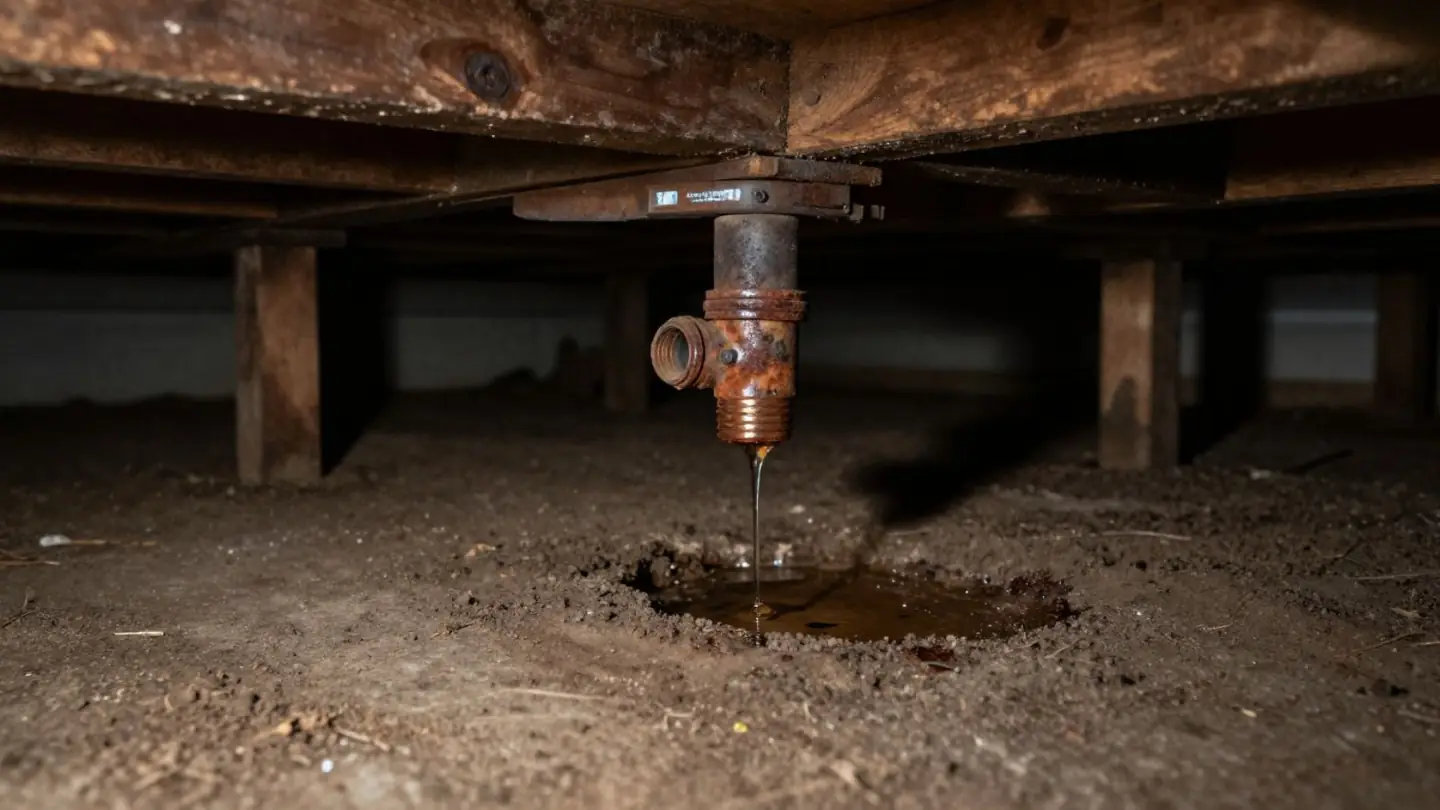
Do you even have a crawl space?
Start here, because many readers will not. Most homes in this area are built on concrete slabs, so a crawl space shows up mainly in older pier-and-beam houses and in some additions. This page exists for those homes, and we do not claim that any neighborhood or share of houses has one.
If your floor is concrete, the common causes are different. A supply line under the slab is a slab leak, and the wet floor above it is dried with the methods described on our structural drying page. If you are not sure, look for a small access hatch in a closet, hallway or on the outside of the foundation wall.
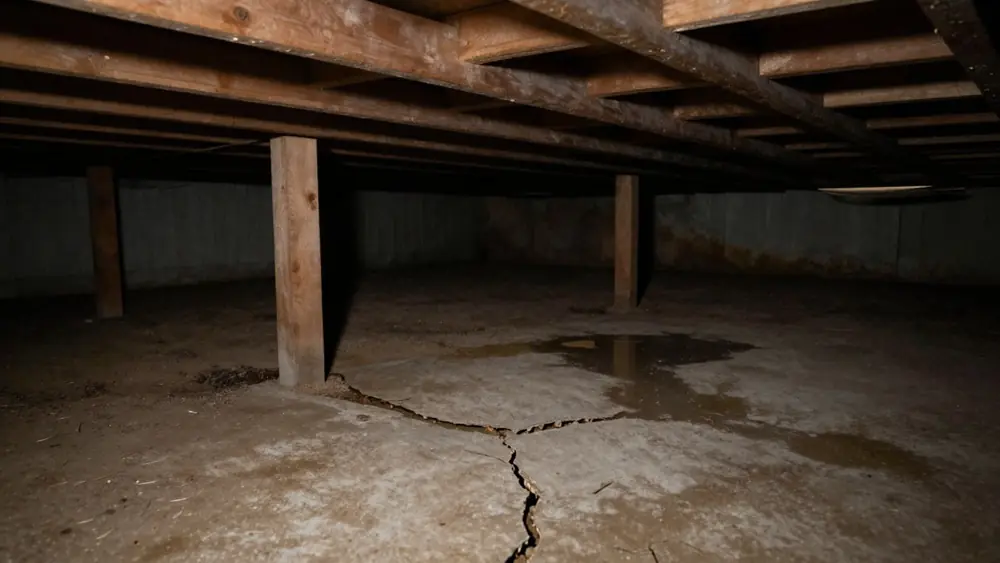
Water under a house is quiet, and the dispatch line is open 24/7 when it is not. Crawl space water damage in The Colony, TX happens in the low, enclosed space under a raised floor, along with the insulation, vapor barrier, framing and subfloor it reaches. The job is extraction, drying and cleaning. It is not waterproofing, which is a separate construction service we do not offer.
Talk to dispatch
Describe what you see and we will tell you what happens next, in plain words, before any work starts.
How water gets under a house
There are two broad sources: water from your plumbing and water from the outside. They look alike on the ground, but the fix is different, so it helps to know which one you have.
Plumbing leaks
Supply lines, drain lines and water heater connections run through the space. A slow drip can wet insulation and soil for weeks, and a split line can fill the space in hours.
Drainage and grading
Soil that slopes toward the foundation, gutters that discharge at the wall and blocked drains send rain toward the vents and the access panel.
Vents and openings
Foundation vents, a loose access cover and gaps around pipe penetrations let wind-driven rain enter.
Standing groundwater
After long rains the soil can stay saturated, and water can sit under the floor even when no pipe has failed.
Why rain matters under a floor
Dallas and Fort Worth average 37.01 inches of precipitation yearly according to National Weather Service 1991 to 2020 data, and it often comes in heavy bursts. A crawl space that stays dry in a mild year can take on water in a wet spring. If your space is wet only after big storms, drainage is the likely cause, and plumbing is the likely suspect when it stays wet in dry weather.
When runoff seems to be heading for your lot from a street or drainageway, report it to the city's Storm Water Utility at 972-624-3129. To learn whether the lot sits in a mapped floodplain, consult the FEMA map and then ask the city.
Signs that something is wrong under the floor
From inside the house, you rarely see crawl space water directly. You see its effects.
- A musty or earthy smell that is strongest near floor vents or in the lowest rooms.
- Floors that feel soft, bouncy or cold, or boards that cup and gap.
- Doors and cabinets that stick or no longer close squarely.
- Rising humidity, window condensation or a damp feeling in a closed house.
- Insects, rodents or wildlife noise below the floor.
- Standing water or wet soil when you look through the access panel with a light.
Safety before you open the hatch
A crawl space is tight, dark and full of surprises. Looking from the opening is safe. Going in with water on the ground is not.
- Find and close the main water valve if you think a pipe is leaking.
- Do not crawl in alone, and do not enter if the soil is flooded.
- Look in with a flashlight from the opening, and take photos from there.
- Stay clear of wiring, junction boxes and anything that hangs or sags.
- Expect wildlife. Snakes, rodents and insects use wet crawl spaces, so do not reach into dark corners.
- Call the dispatch line and describe what you saw.
Electricity, water and tight spaces
Many crawl spaces carry wiring, light fixtures or an outlet for the water heater or HVAC. Never step into standing water near any of them. Do not use a household extension cord to power a pump or light in a wet space.
If you notice sparks, a burning smell or a buzzing sound, get out of the space and contact 911 or the utility ahead of the restoration line. Shut off power at the breaker box only when the floor around it is dry.
Water under the house right now
Standing water, a running pipe or a floor that suddenly feels soft is a same-day matter. Water that sits under a floor keeps wetting the subfloor and joists, and the space has little airflow to carry moisture out.
Calls about water under a house come in regularly, and they often involve a leak the owner did not know about. Even a modest amount of water in a closed space can hold humidity for a long time, so waiting for it to evaporate rarely works.
How a crawl space gets pumped and dried
Access sets the pace. A tech suits up and works from the hatch, using a submersible pump to move standing water out through a hose and a portable extraction unit for wet soil and matted insulation. Where the space is too low to stand, equipment is staged at the opening and hoses are run in.
Wet insulation is usually removed, since it holds water against the subfloor. A torn or soaked vapor barrier is documented and repaired, or replaced after the space is dry. Moisture meters read the joists and subfloor, and a thermal imaging camera helps trace water to its source.
Drying uses air movers placed to push air across the wood and dehumidifiers sized to the volume of the space. Readings continue until the wood reaches the dry standard for that material. For wood subfloors the guiding document is ANSI/IICRC S500, and it is fair to ask a company if its crews work by it. If growth is already visible, our mold remediation service covers the next step.
Why wet crawl spaces turn into mold problems
Mold needs moisture, and a wet crawl space supplies it for as long as it stays wet. Wood, insulation and paper-faced material all hold water, and the dark, still air helps it linger. We do not diagnose health issues, so take any health concern to a physician.
Fix the water source first, then dry the structure. Cleaning without drying only buys time. If you plan to sell or refinance, remember that mold in a crawl space can come up during inspections, and a documented drying record is useful to have.
Options and trade-offs
Not every wet crawl space needs the same response. This table lays out the usual choices.
| Situation | Typical approach | Trade-off |
|---|---|---|
| Shallow water from a one-time storm | Pump out, dry the space, check for source | Fast, but may return if drainage is not addressed |
| Leaking supply or drain line | Plumber repairs the line, then extraction and drying | Drying first without the repair wastes effort |
| Wet insulation and sagging batts | Remove the insulation and dry the framing | Costs more up front but avoids a damp pocket |
| Wet vapor barrier and soil | Dry, clean, then reinstall or replace the barrier | The barrier is installed after drying, not before |
| Recurring water every storm | Drainage and grading fixes by the right trade | Restoration cleans up, it does not stop future entry |
Restoration is not waterproofing. If water keeps coming back, a drainage or foundation contractor addresses the cause.
What changes the cost
A real figure depends on how you reach the space, how deep the water is and where it came from. We talk those through by phone and lay out the scope before work starts.
| Factor | How it changes the job |
|---|---|
| Access and clearance | Tight spaces slow every task and may need extra labor |
| Depth of the water and area covered | More water means more pumping and longer drying |
| Insulation and barrier condition | Wet insulation and torn barrier add removal and replacement |
| Source of the water | A plumbing repair is separate from drying, and drainage work is its own trade |
| Drying days and equipment | Equipment counts follow the air volume of the space and the wood moisture readings |
Insurance and reporting
Texas Department of Insurance guidance treats an abrupt event like a burst pipe as covered under home policies, while gradual leaks and seepage are usually excluded, along with the resulting mold. Flood is not covered and needs a separate flood policy. Water that slowly built up under a house for months is likely to fall on the gradual side.
Hidden water is the common case here. For hidden damage the state insurance department advises reporting promptly after you first notice it. Photograph before repairs, keep damaged items, and save receipts for temporary fixes. Check your policy and ask your insurer, and never assume approval.
Prevention for pier-and-beam homes
- Keep the soil sloped away from the foundation, and clear the gutters.
- Extend downspouts away from the house so they do not discharge at the wall.
- Check the access panel and vents after storms.
- Look at exposed plumbing a few times a year for drips, stains or corrosion.
- Watch the water meter with everything off, since movement can mean a hidden leak.
- Know where the main shutoff is, and keep a flashlight near the access hatch.
Older homes in nearby cities
Our crews also take calls in Plano, where many homes are decades old. Calls also come in from Carrollton, and the same checks apply to any house with a raised floor.
Frequently asked questions
Is a crawl space flood treated as an emergency at night or on weekends in The Colony?
We answer at all hours and offer same-day response when crews are available. If you see standing water through the access panel, close the main valve if a pipe may be leaking, stay out of the space, and take photos from the opening while you wait.
How do I know whether my house has a crawl space?
Look for a small access hatch in a closet floor or hallway, or a vented foundation wall with a low door outside. Most homes here are on slabs, so many owners will not find one. If your floor is concrete, a wet floor is more likely a slab leak or a surface water problem.
Is crawl space water an emergency?
Treat it as one when water is standing, a pipe is running or the floor above feels soft. The space has little airflow, so water lingers and wets the framing and subfloor. A small, old damp spot is less urgent, but it is worth a call to learn the cause.
What does a wet vapor barrier mean?
A vapor barrier is the plastic sheet over the soil. If it is wet or torn, moisture can reach the framing. We dry the space and record the condition, and the barrier is repaired or replaced once the area is dry.
Can you work in a very tight crawl space?
Often yes, but access decides the method. We stage pumps and extraction units at the opening and run hoses in, and a technician works as far as is safe. Space that is too low or hazardous may call for a different approach, so describe what you see when you call.
Is this the same as waterproofing?
No. Restoration removes water and dries the space after an event. Waterproofing is construction work aimed at stopping future entry, and it is outside what we do. If water returns after every storm, you will also need a drainage or foundation contractor.