You turned off the water, mopped up the floor, and the room smells normal again. Yet the baseboard is cool to the touch and the wall paint has a faint wave in it. That gap between what you can see and what is inside the wall is the reason structural drying exists.
Structural drying and dehumidification in The Colony, TX is the controlled removal of moisture from building materials such as studs, subfloor, drywall and concrete, using air movers, dehumidifiers and daily meter readings until each material reaches its dry standard.
Why a house that feels dry can still be wet
Air feels dry fast. Wood framing, drywall paper and subfloor sheathing hold water inside the material, and it releases slowly. A room can seem fine within a day while the bottom plate of a wall is still wet behind the paint.
Our climate does not help. About 37.01 inches of precipitation falls here each year, per the National Weather Service 1991 to 2020 normals, so outdoor air is often too humid to speed natural drying. Closing the house and relying on open windows is not a drying plan.
Wet materials left in place also keep feeding mold growth, which is why mold needs moisture to start. Measuring is the only way to know when the risk is gone.
Talk to dispatch
Describe what you see and we will tell you what happens next, in plain words, before any work starts.
How the drying class sets the plan
The classes come from ANSI/IICRC S500, a published reference, so a fair question for any contractor is whether its crews follow it. A class describes how much water the materials absorbed and how fast it will evaporate, which drives how much equipment the job needs.
| Class | What it describes | What it implies |
|---|---|---|
| Class 1 | Small area, low absorption materials | Light equipment and a short drying period |
| Class 2 | Whole room, carpet and wall wicking | More air movement, wall cavity attention |
| Class 3 | Water from above, saturated ceilings, walls and floors | Heavy extraction first, then extended drying |
| Class 4 | Specialty materials such as hardwood, plaster, concrete | Slow release, low humidity dehumidification, longer monitoring |
Water category (clean, gray or black) is a separate question and decides what must be removed before drying starts.
The equipment and what each piece does
Air movers
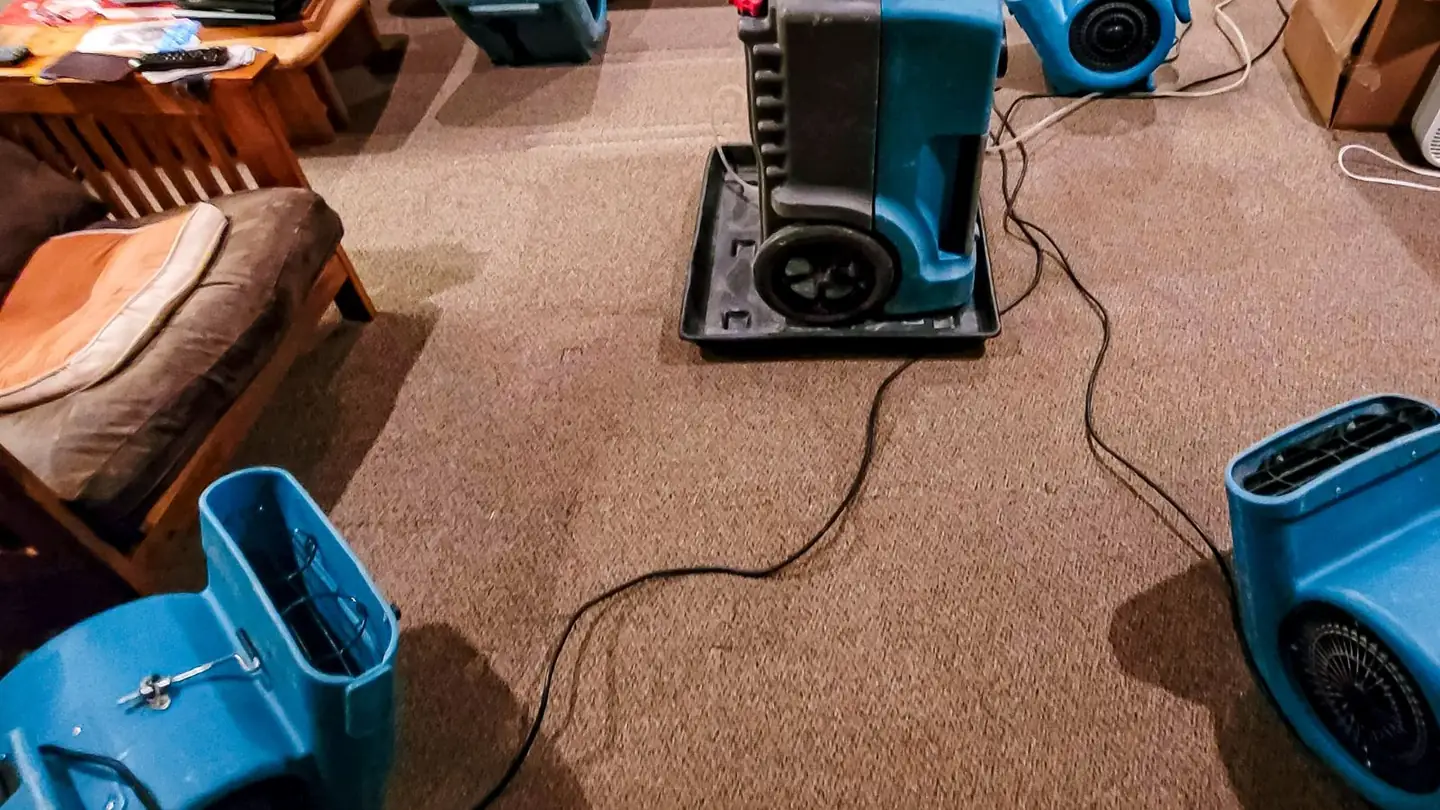
Low, wide fans that push air across wet surfaces. Placement matters more than quantity. Directed airflow along walls and under cabinets pulls moisture off the surface, where the dehumidifier can capture it.
LGR dehumidifiers
Low grain refrigerant units cool the air, condense the water out and return warmer, drier air. They work well in the warm, moist conditions found in occupied homes, and they are the standard unit for most residential jobs.
Desiccant dehumidifiers
These use a moisture absorbing wheel instead of cold coils. They can pull air down to lower humidity than a refrigerant unit, which helps with dense materials, cooler spaces and specialty floors.
Meters and thermal cameras
Moisture meters give numbers for wood, drywall and concrete. A thermal imaging camera finds cool, wet spots behind surfaces so we know where to put the probe and where to open a wall.
Drying wall cavities, subfloors and ceilings
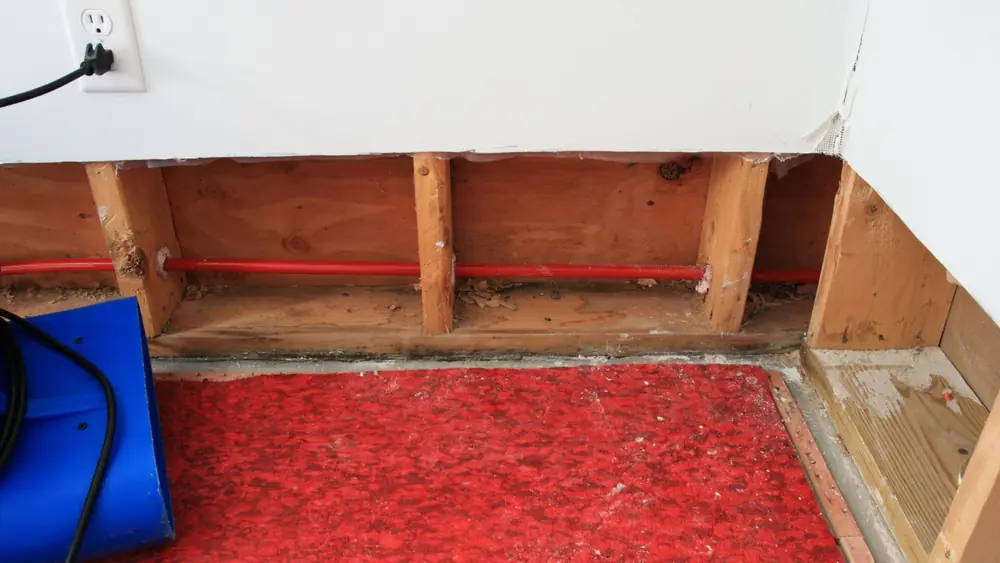
Air movers cannot push moisture out of a closed cavity by themselves. Crews often remove baseboard, drill small holes at the base of a wall, or lift a strip of drywall so air can reach the studs and insulation inside.
Subfloors dry from above and below. Where flooring is thick or sealed, special mats can pull air through the layer underneath. Wet insulation is usually removed, because it holds water against the framing for days.
For a closer look at the rebuild that follows, see water damage repair.
Electrical and equipment safety
Drying equipment draws power in rooms that were just wet, so the first check is the circuits. Equipment should run on dry, protected outlets and cords should stay out of any moisture. Never run a damaged cord.
Before equipment runs
Leave alone any outlet, appliance or panel the water got to. Turn off the breaker only when the panel is itself dry and you can walk to it on dry ground. Smelling gas or seeing sparks is the cue to step outside and ring 911 or the utility, not us.
Keep children and pets away from running equipment and cords, and do not move dehumidifiers yourself while they are connected.
Daily monitoring and how the end point is set
Every visit, readings are taken at the same marked points and recorded in a drying log. Equipment is moved, added or removed based on the trend. If numbers stop falling, something is wrong, such as a wet cavity nobody opened.
Drying continues until the readings return to the dry standard for that material. A concrete slab, a pine stud and drywall each have different targets, so one reading cannot declare the whole house done. We do not invent a universal number.
Living with the equipment
- Expect noise. Several air movers and a dehumidifier are loud, and that is normal.
- Expect warmth. Dehumidifiers add heat to the room, so cooling costs rise during drying.
- Keep doors and windows closed in the drying area, so the machines are not dehumidifying the outdoors.
- Do not shut equipment off at night. Drying works continuously, and stopping lets moisture return.
- Do not move air movers. Their placement was set to match airflow paths.
Choosing a drying approach
There are trade-offs in how much is opened and removed versus dried in place. The table lays out the common decisions.
| Approach | Best fit | Trade-off |
|---|---|---|
| Dry in place | Clean water, sealed floors, recent loss | Less demolition, but needs close monitoring |
| Open and dry | Wall cavities, wet insulation | Faster results, but patching is needed afterward |
| Remove and replace | Long-wet or contaminated materials | Certain removal, but a larger rebuild |
| Add desiccant units | Dense materials, low humidity targets | Stronger, but more equipment and energy |
What changes the cost
Call the dispatch line and describe the loss, and we will explain what real numbers would look like once the scope is known. If the drying is part of an insurance claim, our water mitigation page covers how the first response connects to it.
| Factor | Why it matters |
|---|---|
| Affected square footage | More area means more equipment and more setup |
| Material types | Hardwood and concrete dry slowly and need more days |
| Drying class | Higher classes call for stronger dehumidification |
| Days of monitoring | Visits continue until readings meet the dry standard |
| Wall and floor openings | Cuts that open cavities add labor and patching |
Insurance, documentation and permits
The Texas Department of Insurance advises reporting hidden water damage within days of first seeing it, since deadlines vary by policy. Take photos first, hold on to damaged items for the adjuster, and put off permanent repairs until the insurer has inspected. A drying log can serve as a record of what was wet and when.
Sudden and accidental losses are the kind policies most often address, and gradual seepage is usually excluded. Check your policy, and never read this as a promise of coverage.
Opening walls and doing repairs afterward may need a permit. Ask the city's Building Inspections and Permits department before cutting into structure.
Drying work in Frisco and Plano
Frisco's housing is young, with 82.1 percent of single-family units built since 2000 according to the city's 2040 plan, so most losses there involve modern drywall and engineered framing. Plano's large housing base dates mostly from the 1970s to 1990s, so older layered floors and original subfloors turn up more often. Our Frisco and Plano pages explain how we work in each area. The method is the same wherever the house is. The readings tell us when to stop.
Carpet in a drying job
Carpet and pad often decide the equipment count in a room. Our carpet water damage page explains when carpet stays and when it goes.
Frequently asked questions
How long does structural drying take?
Most losses are dried over several days, but the length depends on what got wet. Hardwood, concrete and wall cavities take longer than carpet. Drying ends when each material tests dry on the meter, not on a calendar date.
Why is the equipment so loud?
Air movers push large volumes of air and dehumidifiers run compressors or heated wheels. The noise is the sign they are working. We can reduce the number of units where readings allow, but not silence them.
Will drying raise my electric bill?
Yes, usually. Several air movers and dehumidifiers run around the clock, and dehumidifiers also add heat that the air conditioner must handle. Ask your insurer how utility cost increases are treated under your policy.
Can I turn the equipment off at night?
Please do not. Drying is continuous, and stopping the equipment lets moisture creep back into materials that were nearly dry. If the noise is a problem, call and we can talk through options.
How do you know the structure is dry?
Moisture meters give readings on wood, drywall and concrete, and a thermal imaging camera checks for cool, wet spots. Each material is compared to its dry standard, and the drying log shows the trend over the visits.
What if the framing is wet but the surface looks fine?
That is common. Moisture sits inside studs and subfloor long after paint looks normal. A meter and a thermal camera locate it, and a small opening at the base of the wall is often enough to confirm and dry the cavity.