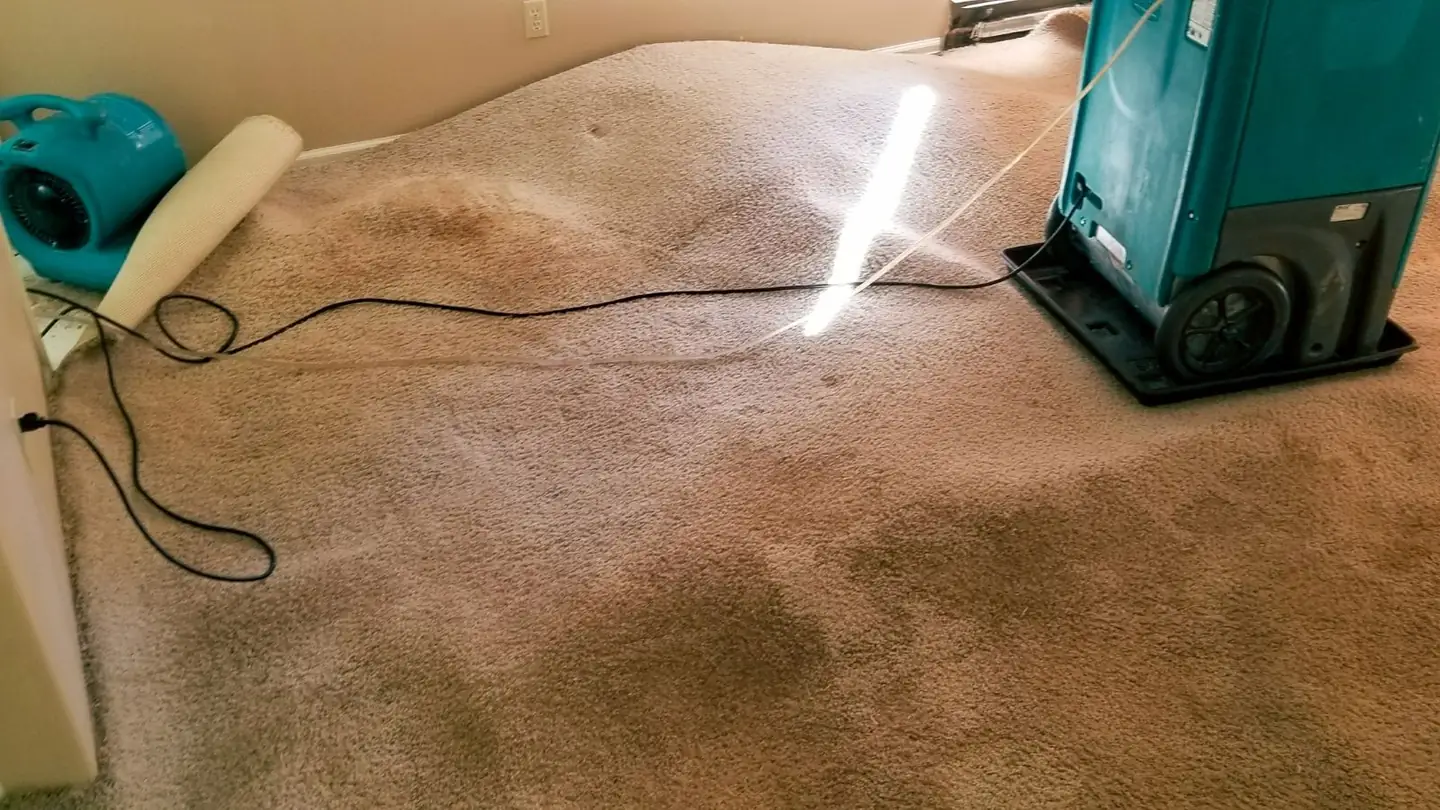
You step on the carpet and it squishes, or you notice a dark patch spreading from a wall. The next few hours decide how much of the floor can be kept.
Carpet water damage restoration in The Colony, TX is the process of identifying the category of water in the carpet, then drying, cleaning or removing the carpet, pad and subfloor accordingly. Carpet is only the top layer of a floor system. The pad below it acts like a sponge, and the subfloor below that decides how long drying takes.
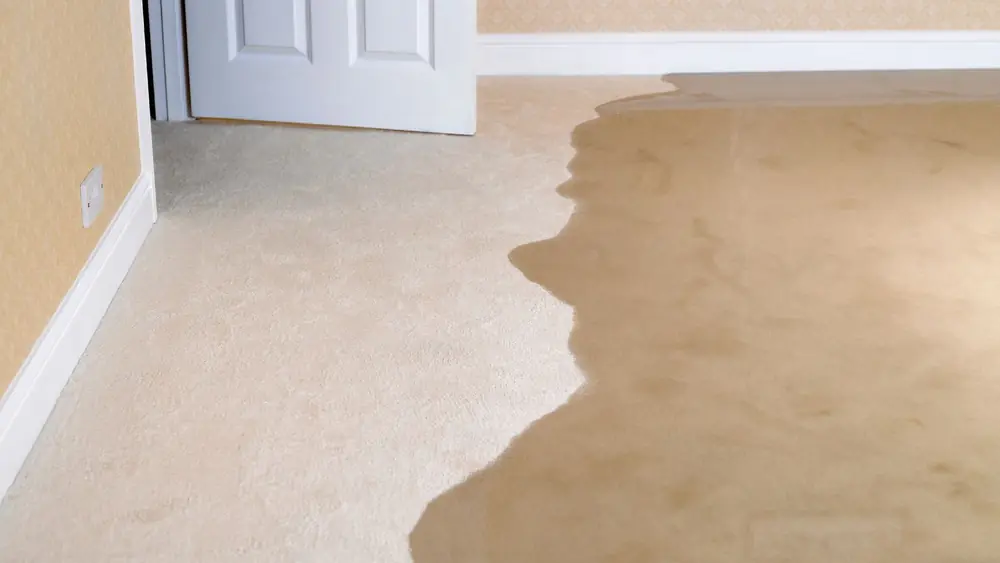
Step one: what kind of water is in the carpet
Every wet carpet decision starts with the category of water, as defined in ANSI/IICRC S500, a published reference any restoration company should be able to discuss. Category 1 comes from a clean source such as a supply line or a tub overflow. Category 2 carries some contamination, for example washing machine discharge. Category 3 includes sewage and anything that has risen from outside.
Category matters because carpet is porous and cannot be reliably disinfected once it has absorbed contaminated water. Clean water gives you options. Sewage means the carpet and pad are normally removed.
Clean water also ages. A category 1 spill that sits long enough can degrade toward category 2 as bacteria grow in the pad, which is why the clock matters even for a tidy supply line leak.
Talk to dispatch
Describe what you see and we will tell you what happens next, in plain words, before any work starts.
Three paths for wet carpet
Once the category is known, the choice is between drying the carpet where it lies, lifting it to dry the pad and floor, or discarding it. The right path depends on how long it has been wet, how the carpet is attached and what is underneath.
| Path | When it fits | Trade-off |
|---|---|---|
| Dry in place | Clean water, caught early, pad in good shape, small area | Least disruption, but wet pad can trap moisture against the subfloor |
| Lift and dry | Clean or lightly contaminated water, larger area or older wetting | Pad is usually discarded and carpet is re-stretched afterward |
| Remove and replace | Sewage or outside water, long standing wetness, delaminated backing | Highest rebuild scope, lowest risk of odor or regrowth |
| Float or partial lift | Water confined to one zone near a wall | Needs a clean seam and a careful tack strip edge |
A crew with a moisture meter can confirm which path fits after reading the carpet, pad and subfloor.
What you see and smell, and what it means
Wet carpet gives signals before any meter does. A cool, heavy feel means the pad is still holding water. A musty smell that arrives a day or two after the spill means moisture is sitting somewhere you cannot see.
Dark lines along the baseboard usually point to wicking, where water climbs the wall board from the carpet edge. Rippling or a loose feel across the room often means the stretch in the backing has relaxed, which is common after drying and is fixable with a power stretcher.
If the carpet sits over hardwood or concrete, a gray or dark stain at the seams of a plank, or a white powdery film on the slab, tells you water got below the pad.
Safety and the first hour
Before you touch the carpet, stop the water. For a plumbing leak, close the fixture shutoff, then the main valve if it keeps running. The Colony Water Utility supplies water to most of the city. When the trouble is on the city side of the meter, dial 972-625-2741 in business hours or 972-624-4433 after hours for its water and sewer emergency line.
Lift furniture off the carpet and slide foil or plastic under the legs, because wet carpet bleeds color onto wood. Pull up small rugs and hang them to dry.
Electrical and sewage safety
Do not step into a wet room if water is near outlets, power strips or appliances. The breaker is yours to switch off only when the panel stays dry and your feet do too. For shock or gas worries, phone the utility or 911 ahead of the restoration line.
If the water came from a toilet, drain or outside, keep children and pets out and do not run fans or vacuums. Treat the carpet as contaminated until a professional says otherwise.
How the work is done
A crew starts by mapping the wet area with a moisture meter and a thermal imaging camera, and the camera picks out cooler damp patches under the carpet and along the baseboards. Truck-mounted or portable extraction units pull standing and absorbed water out of the carpet first.
- Extraction removes the bulk of the water from carpet and pad before any drying starts.
- For a lift-and-dry job, the carpet is released from the tack strip along one or two walls and floated on air movers so the pad and subfloor can dry underneath.
- Pad that is wet is almost always removed, since it is inexpensive to replace and slow to dry.
- LGR dehumidifiers and air movers stay on until the meter shows the carpet backing and subfloor are dry.
- Antimicrobial treatment goes on carpet that is being kept and on the exposed subfloor, to slow bacterial growth while it dries.
- HEPA air scrubbers can be used when odor or contamination is a concern.
Drying the layers underneath
Carpet is the easy part. Plywood and OSB subfloors take longer than the face of the carpet, and any moisture left there will bring back the smell. Drying continues until the subfloor readings match the dry standard, not until the surface feels fine.
For the equipment science and monitoring logs, see our page on structural drying and dehumidification. For the cleanup of pulled pad, tack strip and debris, the water damage cleanup page covers that stage.
Where carpet water damage usually starts
In homes and apartments, the quiet sources win. A supply hose behind a washer, an ice maker line or a slow drain leak can wet a carpet edge for days. Our page on appliance leak water damage covers how to spot those and what to shut off.
The Texas Department of Insurance notes that sudden and accidental losses are the kind home and renters policies usually address, and that gradual leaks are typically excluded. The practical lesson is simple. A carpet that has been damp for weeks is a harder claim conversation than one reported the day the hose failed.
Census QuickFacts shows that roughly four in ten households in The Colony rent. Renters should put the problem in writing to whoever manages the building, since the lease decides who arranges the carpet work.
What changes the cost
Carpet jobs are priced on scope, not on a flat rate per room. These are the factors that move the number.
| Factor | Why it matters |
|---|---|
| Water category | Category 3 means removal, category 1 can often be dried |
| Square footage affected | More carpet and pad means more extraction and more equipment |
| Carpet and pad type | Dense pad and older backing hold more water |
| Subfloor and what is under it | Plywood, concrete and hardwood each dry differently |
| Drying days and equipment | Heavier wetting needs more air movers and dehumidifiers for longer |
Call for your real number once we know the room and the source. The scope and price are explained before work starts.
Insurance and documentation
Home and renters policies generally address sudden and accidental water damage, and flood damage is usually excluded unless you bought separate flood coverage. Insurers may question a claim if you did not take reasonable steps to limit further damage. Check your policy or ask your insurer which category your loss falls into.
The Texas Department of Insurance advises photographing damage before repairs, keeping damaged items for the adjuster, making temporary repairs and keeping receipts. Hold on to a sample of the removed pad until the adjuster has looked. Avoid permanent repairs, such as laying new carpet, until the insurer has inspected.
Mistakes that cost carpet
- Running a household vacuum on soaked carpet, which is unsafe and spreads water.
- Leaving the pad in place because the carpet surface feels dry.
- Covering the floor with a rug or plastic, which traps moisture.
- Using bleach or strong cleaners over sewage-affected carpet.
- Waiting a week to see if it dries on its own.
Next steps from your part of the area
Carpet losses are common anywhere that the floor plan runs bedrooms and living areas on the same slab. Our crews serve the whole region, including Plano and Little Elm, as well as The Colony.
If the room is wet right now, phone the dispatch line and tell us what you see. We can say whether the carpet is a candidate for drying or a candidate for replacement.
Frequently asked questions
Can wet carpet be saved?
Often yes, if the water was clean and the carpet is dried quickly. Water from a sewer or from outside is a different case, because porous carpet and pad generally cannot be reliably disinfected. A moisture reading and a look at the backing settle the question.
How fast does wet carpet need to dry?
Faster is better, and the first day or two matters most. After that, bacteria and odor become a bigger problem and the pad can begin to break down. There is no single magic hour, so call as soon as you notice the water.
Do you always remove the carpet pad?
In most cases wet pad is discarded, because it holds water for a long time and costs little to replace compared with the risk of odor. Carpet itself can sometimes be saved and re-laid over new pad after the subfloor dries.
Why does carpet smell after it dries?
A lingering musty smell usually means moisture is still in the pad, the tack strip or the subfloor. Cleaning the surface does not cure it. The layers underneath need to reach the dry standard, and any pad that stayed wet needs to come out.
Will carpet need to be stretched after drying?
Often it does. Wet backing relaxes and the carpet can ripple. A power stretcher re-tensions it on the tack strip once the floor is dry, which is a normal last step rather than a sign something went wrong.
Is wet carpet covered by insurance?
It depends on the cause. A hose that fails suddenly is the kind of event many policies address, but slow seepage and flooding often are not. Take photos of the wet carpet, hold on to receipts and ask your insurer how your own policy reads.