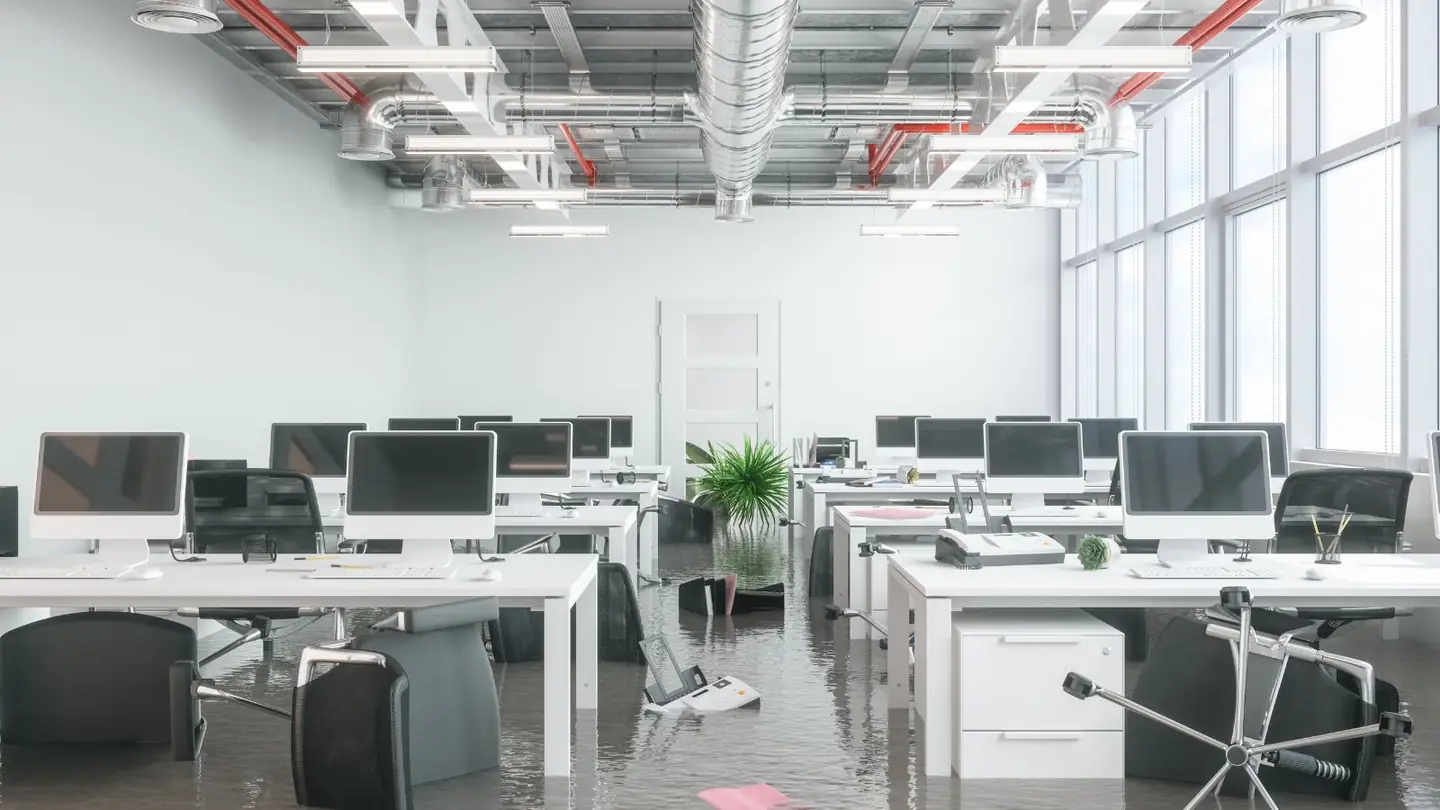
The ceiling tile above the front counter is stained, the carpet in the back office squishes underfoot, and people are still working. Before anyone decides what to do about the water, someone has to decide who is in charge of the decision.
Commercial water damage restoration in The Colony, TX is the extraction, drying and cleanup of water losses in non-residential buildings, handled through a written scope that fits the space, the people using it and the building's materials.
What we do and how this service works
This is a dispatch-based service. You call, describe the building and the loss, and a crew is sent when available, with same-day response when available as the goal. We do not publish a list of building types or promise a fixed schedule, because every space is different.
What we can do is limited to restoration work: extracting water, drying structure and contents with air movers and dehumidifiers, removing wet materials, cleaning and treating surfaces. The scope is described to you in writing terms before any crew starts, so the owner or manager can approve it.
Talk to dispatch
Describe what you see and we will tell you what happens next, in plain words, before any work starts.
Safety first: water, power and the building
Commercial buildings have bigger panels, more outlets and sometimes more than one water supply. Know where the shut-offs are before there is a leak.
Before anyone returns to the wet area
Close the building's main water valve or the valve serving the affected suite. Keep people out of areas where water is near outlets, panels, equipment or appliances. Switch power off at the panel solely when that panel is dry and reachable on dry footing.
If you smell gas, see sparking or suspect the fire panel or elevator controls are wet, evacuate and call 911 or the utility first. Water from a sewer line or a backed up floor drain is contaminated, so keep staff and customers away.
Who to call, and in what order
A licensed plumber repairs the failed pipe or fixture. We handle water extraction, drying and cleanup, and the two jobs can run side by side.
- Whoever is on site calls the property manager or building owner right away. In a leased space, the lease decides who responds.
- Shut off the water at the valve that serves the space, and tell tenants nearby.
- Report a failed city line or main. The city lists 972-625-2741 for business hours and 972-624-4433 for after hours as its water and sewer emergency numbers.
- Call your insurer to open a claim, and ask what documentation it wants.
- Call the dispatch line for the water removal and drying scope.
Scoping a loss in an occupied space
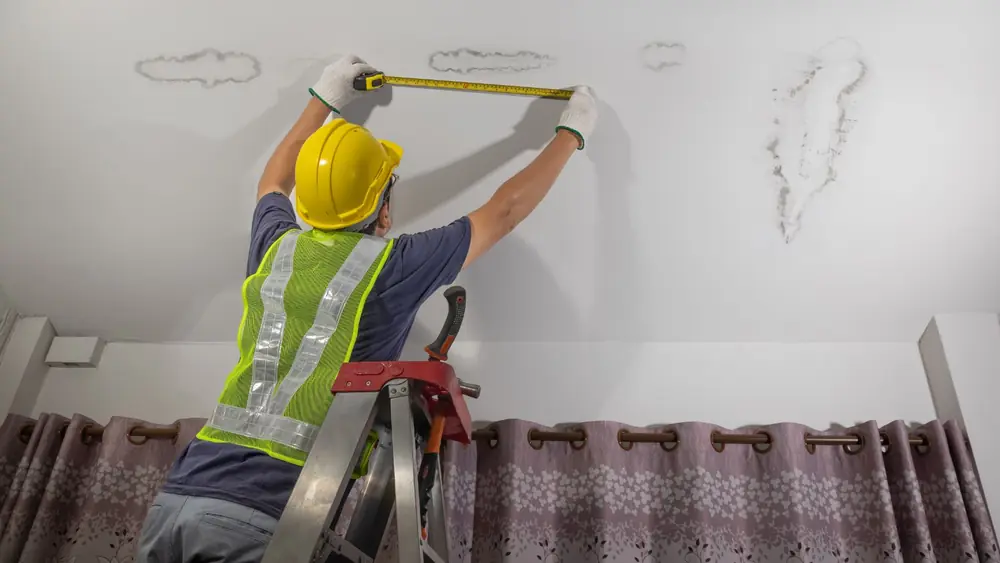
A commercial scope starts with a walkthrough. Moisture meters check walls, floors and ceiling grids, and a thermal imaging camera finds wet areas behind finishes. The scope then lists affected rooms, materials to dry, materials to remove and the equipment planned.
The reading drives everything else. Wet insulation above a ceiling grid, for example, can look like a small stain below and a much larger problem above. Our emergency water removal page explains the extraction step that usually comes first.
Drying then follows ANSI/IICRC S500, and it is reasonable to put the question of whether a contractor works to it to every bidder. Readings are recorded each visit, and our structural drying page describes how the end point is set.
Working around people and operations
Many losses cannot close a whole building, and some can. The choice depends on safety, contamination and how much of the space is involved. Containment barriers and negative air machines with HEPA filters can seal a wet area from the rest of the building when removal or cleanup would otherwise spread dust or odor.
Phasing is also an option. Crews can work one section while another stays in use, or work in stages that fit when the space is empty. Say what hours the space is occupied, and the scope can be written around them.
Materials common in commercial spaces
| Material | Usual approach | Notes |
|---|---|---|
| Ceiling tile and grid | Wet tile is removed, grid inspected | Tile rarely recovers once saturated |
| Drywall | Cut above the wet line or dried in place | Depends on water category and time wet |
| Commercial carpet and tile | Lifted and dried or replaced | Glued carpet complicates drying |
| Concrete slab | Dried with dehumidification | Slow release, so it needs monitoring |
| Insulation and cabinetry | Often removed if wet | Trapped moisture stays in cavities |
Final decisions come from the readings and the category of water, not from appearance.
Responsibility, the lease and documentation
Who pays and who acts is a lease and policy question, not a restoration question. A landlord may be responsible for the building and a tenant for improvements and contents, or the reverse. Read the lease and ask the property manager.
For the insurer, document early. Photograph and video the water, the source and the damage before cleanup, keep damaged items until the adjuster has seen them, and save invoices and receipts for temporary repairs. Business interruption is a policy question, so ask your insurer directly.
Texas Department of Insurance guidance says sudden and accidental losses are often covered while gradual leaks are often excluded, and flood usually needs separate coverage. A commercial policy has its own terms, so check yours.
What changes the cost
A figure only makes sense once the building, the source and the wet materials are known. Describe them on the dispatch line and we will outline the likely scope.
| Factor | Why it matters |
|---|---|
| Floor area and ceiling height | More space means more equipment and setup |
| Water category | Contaminated water adds containment and removal |
| Materials affected | Carpet, tile, drywall and insulation each require a different approach |
| Occupancy and hours | Phased work or after-hours labor changes the schedule |
| Drying duration | Equipment stays until readings reach the dry standard |
Permits and repairs afterward
Work on structure, or on plumbing, electrical and mechanical systems, usually needs a city permit, so ask Building Inspections and Permits before work begins. Existing buildings count, whether the job is an addition, an alteration or a repair. In nearby cities, such as Lewisville or Carrollton, the local building department is the one to call.
Storm and drainage before it becomes a loss
The National Weather Service 1991 to 2020 normals show 37.01 inches of precipitation a year in this area, so roof drains, scuppers and parking lot drainage get tested regularly. The Colony Storm Water Utility, through the city's Engineering department, maintains streets, alleys and drainageways, and drainage complaints go to the hotline at 972-624-3129. A blocked drain on your property is the owner's responsibility, and clearing it before a storm is cheaper than a restoration job.
Mistakes to avoid
- Waiting for the insurer before drying starts. Insurers may deny claims if property is not protected from further damage.
- Leaving wet ceiling tile in place because it has stopped dripping.
- Letting staff walk through contaminated water.
- Moving drying equipment or unplugging it to free an outlet.
- Throwing out damaged items before photographing them.
Related cleanup
Debris removal and surface cleaning after water are covered in our water damage cleanup guide.
Frequently asked questions
Who is responsible for water damage in a leased commercial space?
The lease decides. Landlords commonly handle building systems and tenants handle improvements and contents, but terms vary. Read the lease, notify the property manager right away, and ask your insurer how the loss will be handled.
Can the business stay open during restoration?
Sometimes. It depends on safety, the water category and how much of the space is wet. Containment can separate work areas, and phasing can fit crews around operating hours. Tell us when the space is occupied so the scope reflects it.
How is a commercial scope written?
After a walkthrough with moisture meters and a thermal imaging camera, the scope lists affected areas, materials to dry or remove, the equipment planned and the likely drying period. It is explained before work starts.
How should I document the loss for my insurer?
Photograph and video the source and the damage before cleanup. Keep wet items for the adjuster, save receipts for temporary repairs, and write down times and actions. Business interruption and contents coverage are policy questions, so ask your insurer.
Does restoration cover contents?
We focus on the structure and cleaning, and we can discuss which contents are salvageable. Whether the policy covers contents is a question for your insurer and your lease.
Do you offer commercial service at night?
Yes. Calls are taken day and night, and commercial jobs get same-day response when available. Shut off the water and keep people away from wet electrical areas while you wait.