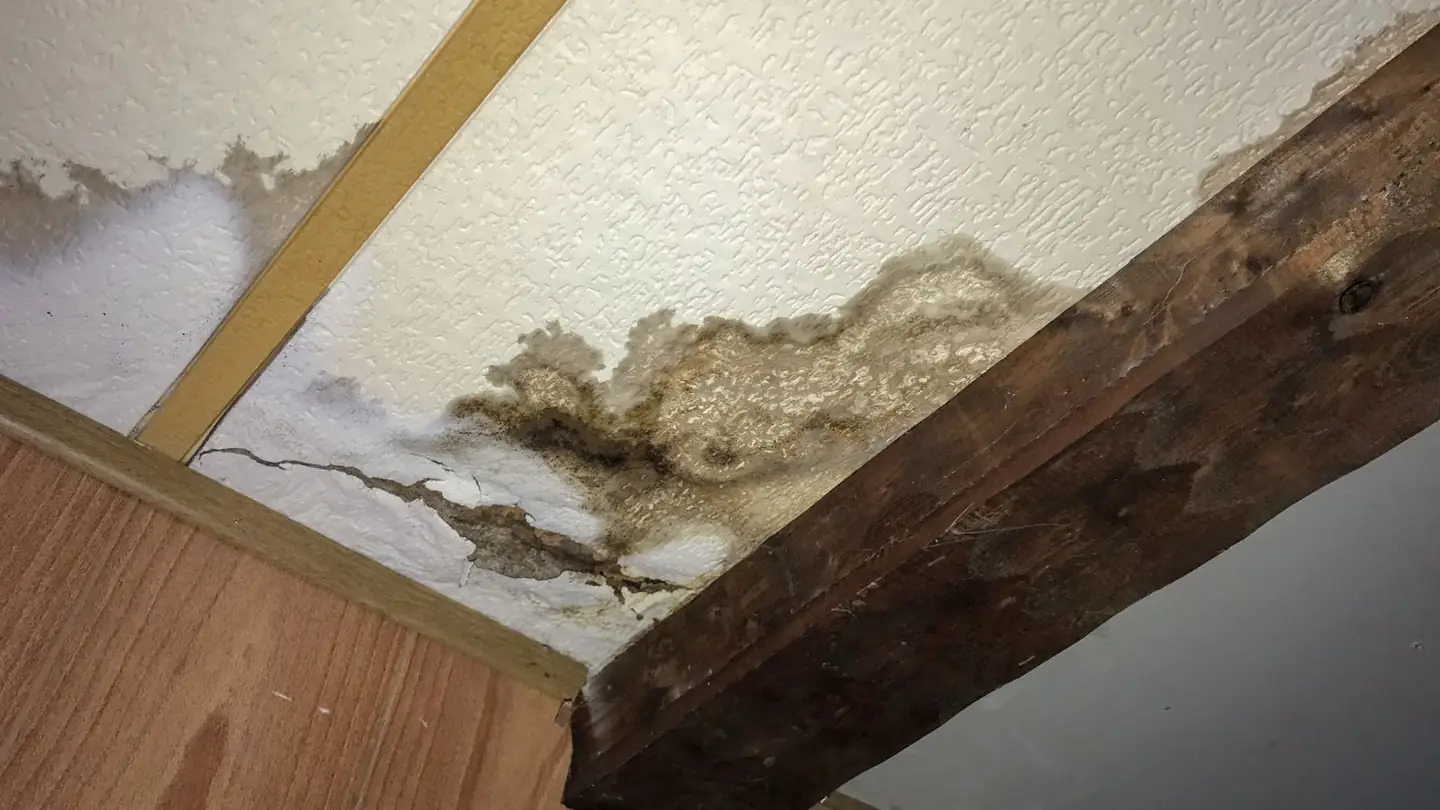
A roof leak is rarely an emergency on the roof itself. It becomes one inside, where the dispatch line is open 24/7 for exactly this: a brown ring spreading on a ceiling, a drip into a bucket at midnight, or a bedroom light fixture holding water.
Roof leak water damage in The Colony, TX is the interior damage caused by rain entering through the roof system, which wets attic insulation, ceiling board, wall cavities and flooring below. We handle that interior damage with extraction, drying and cleaning. A licensed roofer repairs the roof, and the two jobs should move in parallel.
What the water does on its way down
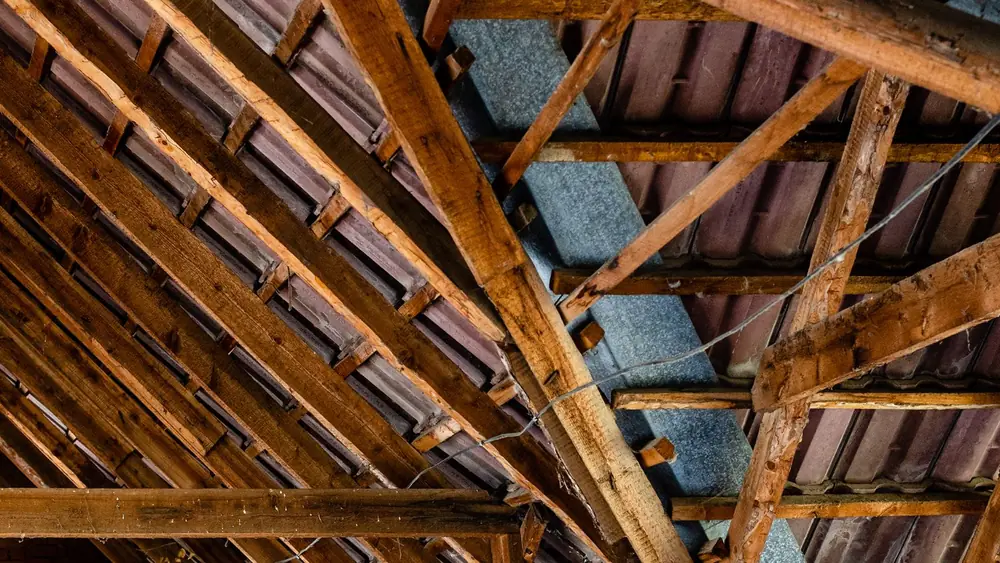
Water enters at a weak spot and rarely drops straight down. It follows a rafter, a nail shank or a wire, soaks the attic insulation first, and then spreads across the top of the ceiling board before it ever shows a stain. By the time you see a spot, the wet area above is usually several times larger.
Soaked insulation is the part people overlook. Fiberglass batts hold water against the board and slow its drying, and blown insulation can clump and stay wet for weeks. A ceiling that looks fine after the drip stops may still be loaded with water that will sag it later.
Gravity then does the rest. Water that pools above a ceiling finds a recessed light, a seam or a vent, and runs down the inside of a wall cavity toward the baseboard. A leak near the roofline can end up as damp carpet two rooms away.
Talk to dispatch
Describe what you see and we will tell you what happens next, in plain words, before any work starts.
Why roofs leak in this part of North Texas
Annual precipitation across Dallas and Fort Worth averages 37.01 inches, per the National Weather Service 1991 to 2020 normals. Little of it falls gently. It arrives as wind-driven storms that push water sideways under shingles, so a roof that stays dry in a calm rain can fail in a front. If your leak only appears in a storm from one direction, tell the roofer which way the wind blew.
Most openings are small and common: lifted shingles, cracked flashing around a chimney or vent pipe, a failed pipe boot, a nail pop, a valley where debris dams the flow, or a hail hit that bruised the mat. Each one leaks only under certain conditions, which is why a leak can seem to come and go.
Roof work also has a permit side. The city's Building Inspections and Permits department says that since the start of October 2025 a roof replacement requires a permit. If your roofer plans more than a patch, ask the department what applies before the work is scheduled.
Signs the leak is bigger than the stain
The stain is the last thing to appear. Watch for these earlier or quieter clues, because each one changes how much has to be dried.
- A ceiling stain that grows after the rain has stopped, which means water is still draining out of insulation above.
- Paint that bubbles, drywall tape that shows through, or a ceiling that has begun to bow downward.
- A musty smell in a closet or hallway on the top floor, especially on humid days.
- Dripping or ticking sounds in the attic or in a wall during and after a storm.
- Water marks around a light fixture, a smoke detector or a ceiling fan housing.
- Dark staining on attic decking or rafters, or wet insulation when you shine a light up there.
Rain is coming in right now: first-hour safety
When water is actively entering, protecting people and the electrical system comes before protecting the ceiling. A ceiling holding water can release it all at once, so do not stand under a bulge.
- Move people, pets and furniture out from under any sagging area, and put a bucket under the drip.
- Puncture a bulging ceiling only if it is safe to do so. Stand to the side, use a screwdriver in the lowest point, and let it drain into a bucket or a tub.
- Photograph the stain, the ceiling and the attic before anything is moved or cleaned.
- Lift rugs and small furniture off the floor below, and slide larger pieces to a dry room.
- Call a roofer for a temporary tarp, and call the dispatch line for the inside.
Water and light fixtures do not mix
If water is dripping from a light fixture, a ceiling fan or a smoke detector, treat the circuit as live. Do not touch the fixture, and do not flip the switch to test it.
Flip that circuit breaker off from a dry floor, and skip it if reaching the box means wading. Sparks, a burning smell or an unsafe approach mean you should leave the room and phone 911 or the utility ahead of the restoration line. Do not climb onto a wet roof in the dark.
Tarping, documenting and what the insurer expects
The Texas Department of Insurance advises owners to make temporary repairs to stop further damage and to keep every receipt. A tarp is a temporary repair. A new section of roof is not, and Texas Department of Insurance guidance says permanent repairs should wait until the insurer has inspected.
That sequence matters because insurers may deny part of a claim if the property is not protected from further damage. Photograph the damage first, tarp or cover the opening, save the damaged shingle or flashing if you can, and report the loss in writing. Policy deadlines vary, and some are short.
How we dry what is under the leak
We start by finding the wet area, not guessing at it. A moisture meter reads the ceiling, the wall tops and the floor below, and a thermal imaging camera shows cooler wet zones through paint. Readings get marked so the drying plan follows the water, not the stain.
Wet insulation usually comes out, because it cannot dry in place quickly. Ceiling board is cut back above the wet line when it is sagging or saturated. Air movers and LGR dehumidifiers then run on the open cavity, and moisture readings are taken again each visit.
Crews keep drying each material until its moisture readings reach the dry standard. Any company you hire should be able to say whether its crews follow ANSI/IICRC S500, the published restoration reference. Once the structure is dry, the patch, texture and paint come next. Our drywall repair page covers that part, and structural drying explains the equipment in more detail.
Options after a leak: what to do with the ceiling
Not every wet ceiling has to come down. The right call depends on how long the board stayed wet, whether the water was clean rain, and whether the board has lost its shape.
| Condition of the ceiling | Usual decision | Why |
|---|---|---|
| Light stain, board firm, caught within a day | Dry in place with airflow and monitor | Firm board often recovers if the cavity above dries |
| Visible sag or bubbled paint | Cut out the wet section | Wet board loses strength and will not flatten |
| Wet insulation above any ceiling | Remove and replace the insulation | It holds water against the board for a long time |
| Dark growth or a persistent musty smell | Stop and see the mold remediation page | Moisture has been present long enough to support growth |
| Water ran down inside a wall | Open the wall cavity and dry it | Wall cavities hide wet framing and insulation |
A moisture reading, not appearance, decides each row. Dry looks the same as damp until it is measured.
How this differs from a storm loss
This page stays on the roof and what sits beneath it. When a storm also pushes water through windows, doors, garage thresholds or drainage, the job is wider, and our storm water damage cleanup page covers that whole-house picture. Many real losses involve both, and one crew can plan them together.
Neighbors in Frisco and Carrollton deal with the same weather pattern, and the same steps apply there.
What changes the cost
Roof leak jobs vary a lot because water paths vary. These are the factors that move the scope, and none of them can be judged from a photo of a stain alone.
| Factor | How it changes the job |
|---|---|
| Area of wet ceiling and insulation | More square footage means more removal, more airflow and more drying days |
| Whether water ran into wall cavities | Opening walls adds labor and extends the drying period |
| Time since the leak began | Older wetting means deeper saturation and a greater chance of staining or growth |
| Ceiling and finish type | Textured, high or vaulted ceilings take more effort to remove and restore |
| Equipment and days on site | Dehumidifiers and air movers are scheduled by the amount of water, not the room size |
A quote for your ceiling comes after a short phone conversation about the stain, the attic and the rooms below. Nobody starts until you have heard how the price is set.
Is a roof leak covered?
Texas Department of Insurance guidance describes typical home coverage as reaching abrupt, unexpected water loss. A storm that opens the roof and lets rain in is often treated differently from a slow leak that has been dripping through worn flashing for months. A leak that seeps for months is usually treated as gradual and excluded, mold included.
Coverage for the roof itself and coverage for the interior damage can be two separate questions on one claim. Read your policy, ask your insurer what applies, and never assume approval before the adjuster has looked at it.
Mistakes that make a roof leak cost more
- Waiting for the next dry day before dealing with wet insulation.
- Painting over a stain before the ceiling has been measured dry.
- Having the roof permanently repaired before the insurer has inspected it.
- Throwing out the damaged shingle, flashing or decking before photographing it.
- Assuming the leak is fixed because the drip stopped, when the water above is still draining.
- Running a heater or fan at a bulging ceiling instead of letting it drain safely.
Frequently asked questions
Do you take emergency roof leak calls during a nighttime storm in The Colony?
Any hour works. A leak reported at 2 a.m. is treated like one reported at noon, and we offer same-day response when crews are available. While you wait, move people from under any sag, catch drips, photograph the damage and call a roofer about a tarp.
My ceiling is stained but the roof looks dry. Why?
Water often travels along rafters and pipes before it drops, so the stain can sit well away from the opening. Condensation on ducts or a plumbing leak in the attic can also stain a ceiling when it has not rained. A moisture meter and thermal camera can tell whether the water is fresh and where it started.
When should the roof be tarped?
As soon as it is safe, and ideally before the next rain. A tarp is a temporary repair that limits further damage, and insurers generally expect you to limit further loss. Do not climb a wet roof yourself. Keep the receipt and photograph the damage before it is covered.
Can wet attic insulation be dried or does it have to go?
Most of the time it has to go. Insulation holds water against the ceiling board and dries slowly, which keeps the board wet longer. Removing it lets the cavity dry faster and lets the crew read the wood and board beneath. New insulation goes in after readings are back to the dry standard.
Does homeowners insurance cover a roof leak?
It depends on the cause. Sudden and accidental damage, such as a storm opening the roof, is often covered, while gradual leaks from wear are usually excluded. Read your policy and put the question to your insurer. Photograph everything, keep receipts for temporary repairs and wait for the insurer before permanent roof work.
How soon can mold start after a roof leak?
Mold needs moisture, and wet insulation and ceiling board can stay damp long enough to support it if the area is not dried promptly. We do not diagnose health effects, and questions about health belong to a physician. Fix the leak first, then dry the structure quickly.