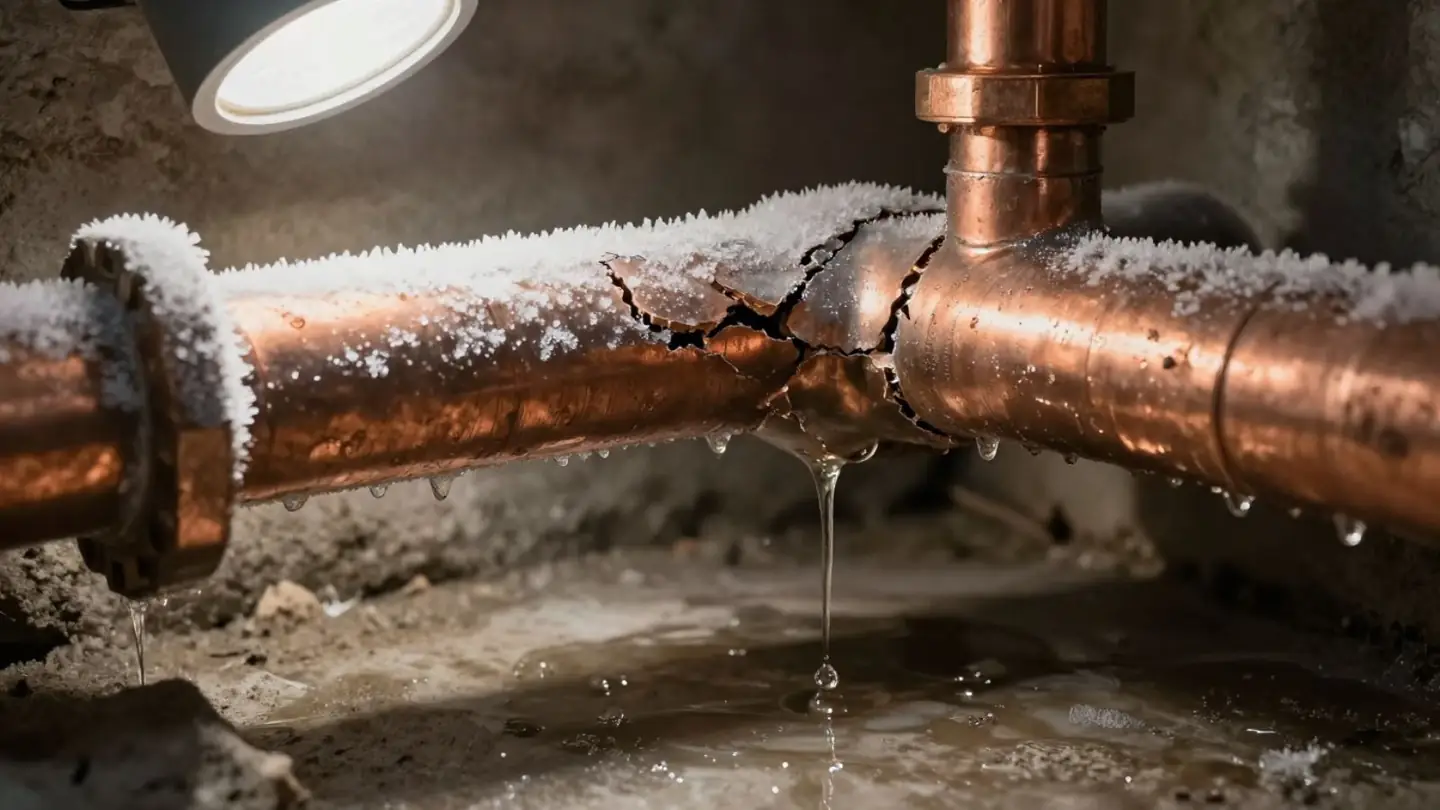
A freeze gives you no warning that anything is wrong, and the trouble shows up when the temperature climbs. If water is already coming through a ceiling or a wall, our dispatch line is open 24/7. Close the main valve, keep people clear of wet areas near outlets, and lift valuables off the floor while you wait.
Frozen pipe water damage in The Colony, TX is the flooding that follows when ice splits or pushes apart a water line and the thaw sends water through the opening. The ice plugs the break while it lasts. When it melts, the line runs at full pressure.
Why the damage arrives at the thaw
Ice expands as it forms, and the squeezed water behind it presses on the pipe wall until something gives. The split can be a thin line along a copper run or a popped fitting. Frozen water in the opening holds it shut, so the house stays dry and quiet for hours.
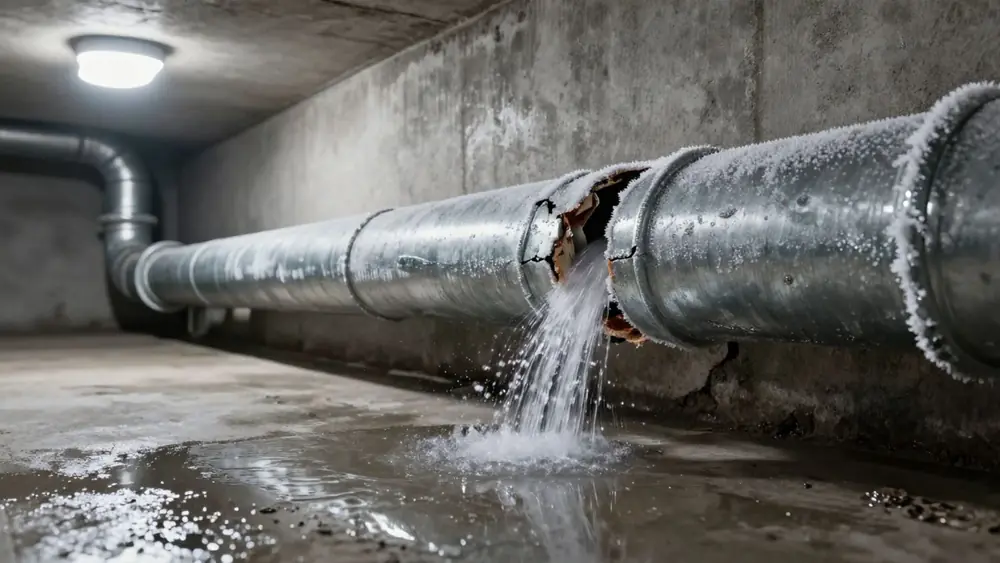
Then the day warms. Ice melts first at the break, and the supply line starts spraying into an attic, a garage ceiling or a wall cavity. A family at work or asleep may not know for hours. That delay is why thaw leaks run longer than most burst pipes.
Talk to dispatch
Describe what you see and we will tell you what happens next, in plain words, before any work starts.
What the local climate means for your plumbing
Across the Dallas and Fort Worth area, National Weather Service normals for 1991 to 2020 put the freeze count at an average of 29 per season. That is a lot of nights below 32 degrees for a region that does not think of itself as cold. Pipes in attics, exterior walls and garages are exposed to every one of them.
In February 2021, FEMA declared disaster DR-4586 for the Texas severe winter storms, with an incident period of February 11 to 21, with individual and public assistance designated for Denton County. The takeaway for a homeowner is simple: know where your main valve is before the next hard freeze, not during it.
The Colony Water Utility supplies the line to your meter, according to the city's water quality report. Beyond the meter, the plumbing and the freeze exposure are yours.
Where frozen lines tend to split
- Attic runs, especially where insulation was pushed aside or never covered the pipe.
- Garage water lines and any laundry or utility plumbing on an unheated wall.
- Exterior wall supply lines to kitchen sinks or bathrooms that back up to the outside.
- Outdoor hose bibs, particularly if a hose was left attached.
- Sprinkler backflow assemblies and the short pipe sections feeding them.
- Water lines in a crawl space or under a pier-and-beam floor.
What you see, hear and smell after a freeze
A faucet that runs slowly or not at all during a freeze tells you ice is in the line. After the temperature rises, new signs matter more.
- Dripping, hissing or a sound of running water where nothing is on.
- A ceiling stain that grows, or a sagging section of ceiling board.
- A damp spot low on an exterior wall, or baseboards pulling away.
- A water meter that keeps moving with every fixture closed.
- Water around a hose bib, in a garage corner or under a laundry area.
- A musty smell in a closet near an outside wall.
First-hour safety and shut-off steps
Work through these in sequence, starting with the valve. Look for electrical hazards before entering any room that has water in it.
- Find the main valve and close it before you try to thaw anything, so the line cannot refill the moment the ice goes.
- Open a faucet below the damage and let the pipes drain, but only if the room is safe to enter.
- Check for water near outlets, light fixtures and the panel. Use the callout below if you see any.
- Photograph the split pipe, the wet surfaces, the ceiling and every damaged item before cleaning up.
- Call a licensed plumber for the repair and the dispatch line for the water. Both calls can happen at once.
Attics, garages and open flame
Never thaw a pipe with a torch, a propane heater or any open flame. Insulation, wood framing and fumes make that a fire risk. Garage and attic wiring can be wet with water you cannot see.
Shut off power at the panel solely when the floor around it is dry. Sparking, a gas odor, or a panel you cannot get to safely means exiting the building and dialing 911 or the utility first, with us afterward.
Can I thaw it myself
Sometimes, with care, and only after the main valve is closed. A hair dryer on a low setting or warm towels on an exposed pipe is the gentlest method. Start near the faucet end and work toward the blockage.
A pipe that has already split will leak the moment it thaws, which is exactly why closing the main first matters. If the frozen run is inside a wall or above a ceiling, thawing it yourself is a gamble. A plumber can check for splits before you restore pressure.
Our process after the thaw
We trace the water from the visible stain back to its path. Moisture meters check framing and board, and a thermal imaging camera shows cooler, wetter zones behind finishes. Mapping the whole loss first keeps equipment in the right rooms.
Submersible pumps and extraction units take standing water out. Saturated attic insulation is removed, and drywall that cannot dry in place is cut above the wet line. Air movers and LGR dehumidifiers then run until daily readings reach the dry standard for each material. When you compare companies, check that the one you pick works from ANSI/IICRC S500.
Fixing the pipe and drying the house
| Task | Who | When |
|---|---|---|
| Close the main valve | You | Before anything else |
| Repair or replace the split section | Licensed plumber | As soon as the water is stopped |
| Extract water, open wet areas, dry | Restoration crew | Same day when available |
| Insulate exposed lines | Plumber or insulation contractor | After repairs, before the next freeze |
| Rebuild finishes | Contractor of your choice | After readings reach dry |
For help sorting the first-day response, see how water mitigation works.
What changes the cost
A thaw leak found within minutes and one that ran all afternoon are very different jobs. A price quoted before anyone sees the house is only a guess.
| Factor | How it affects the scope |
|---|---|
| Hours the water ran | Longer flow soaks more rooms and floors |
| Attic and ceiling involvement | Wet insulation and sagging board add removal work |
| Materials affected | Carpet, hardwood, tile and drywall are handled differently |
| Equipment days | A larger wet area needs more air movers and dehumidifiers |
| Rebuild scope | Finish work such as board, paint and trim is scoped after drying |
Describe the wet areas to the dispatch line. A solid number for your house comes once we understand what the thaw reached, and same-day response depends on availability.
Insurance and frozen pipes
A freeze that splits a line fits what TDI lists as sudden and accidental damage, a category home and renters policies often cover. Gradual leaks are usually excluded. Coverage for a freeze loss depends on your policy, so read it or ask your insurer.
The same TDI guidance on hidden water damage asks you to report the loss within days of noticing it. Take photos before any repair, hold on to damaged items so the adjuster can see them, and save receipts for temporary work. Failing to limit further damage is a reason an insurer may turn down a claim, so shutting off the main matters. Avoid permanent repairs until the insurer has inspected.
Prevention before the next freeze
- Insulate attic and garage lines, and cover any exposed pipe on an exterior wall.
- Open cabinet doors on exterior walls during a hard freeze.
- Disconnect garden hoses and cover hose bibs before temperatures drop.
- Let a faucet drip during a hard freeze, as prevention only, never as a thaw method.
- Learn where your main valve is and make sure it turns.
- Seal gaps where pipes enter the house from the outside.
How soon to call after a storm
If you know a pipe froze and water is flowing, call right away. Do not wait for a hard freeze to be over to find out what happened. Emergency water removal covers pumping out standing water, and if the cause was a split under pressure, our burst pipe water damage page covers that side.
Dispatch serves the surrounding area, including Plano to the south and Little Elm to the north.
Frequently asked questions
Who answers for emergency frozen pipe damage during a weekend freeze in The Colony?
Yes. A thaw can begin while the household is asleep or away for the weekend, and the dispatch line answers at every hour. Same-day response depends on availability. Shut the main valve first and call a plumber about the split pipe.
When does a frozen pipe start leaking?
Usually at the thaw, not during the freeze. Ice plugs a split pipe while it stays frozen. When temperatures rise and the ice melts, water flows through the opening at full line pressure.
Can I thaw a frozen pipe myself?
Only after the main valve is closed, and only with gentle heat such as a hair dryer or warm towels. Never use an open flame. If the pipe is inside a wall or ceiling, ask a plumber.
Does a split pipe always leak?
Not always while it is frozen, but nearly always once it thaws. A pipe that looks fine can have a hairline split that opens when pressure returns, so watch the meter and ceilings.
Is freeze damage covered by insurance?
Policies often cover sudden and accidental water damage, and a burst pipe is a TDI example. Details vary. Check your policy, report the loss within the deadline it lists, and photograph the damage before repairs.
How long after a storm should I wait before checking for leaks?
Do not wait. Check ceilings, garage walls, hose bibs and the meter as soon as temperatures rise above freezing. A leak caught in minutes dries far more simply than one found at dinner.