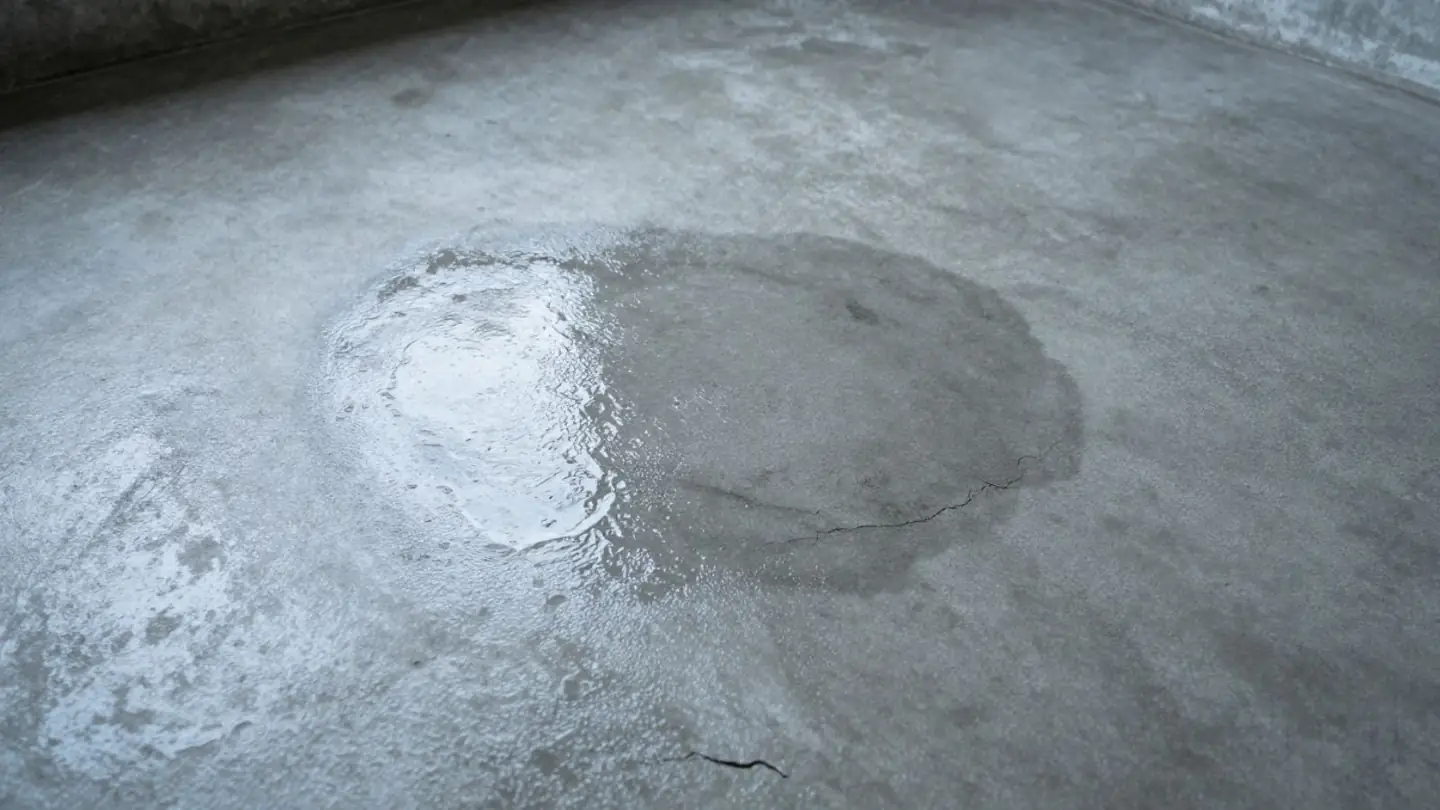
You may have noticed a warm patch on the tile, a faint hiss at night, or a water bill that does not match your habits. If water is reaching the floor, you can call our dispatch line at any hour, 24/7. Shut the main valve, keep everyone off wet floors near outlets, and lift rugs and boxes off the damp area while you wait.
In The Colony, TX, slab leak water damage means wet flooring, baseboards and lower walls that result when a pressurized water line running under or inside a concrete foundation slab begins to leak. We are not a leak detection company. A licensed plumber or leak-detection company finds and fixes the line, and we extract water and dry the structure.
Why this happens in slab-on-grade homes
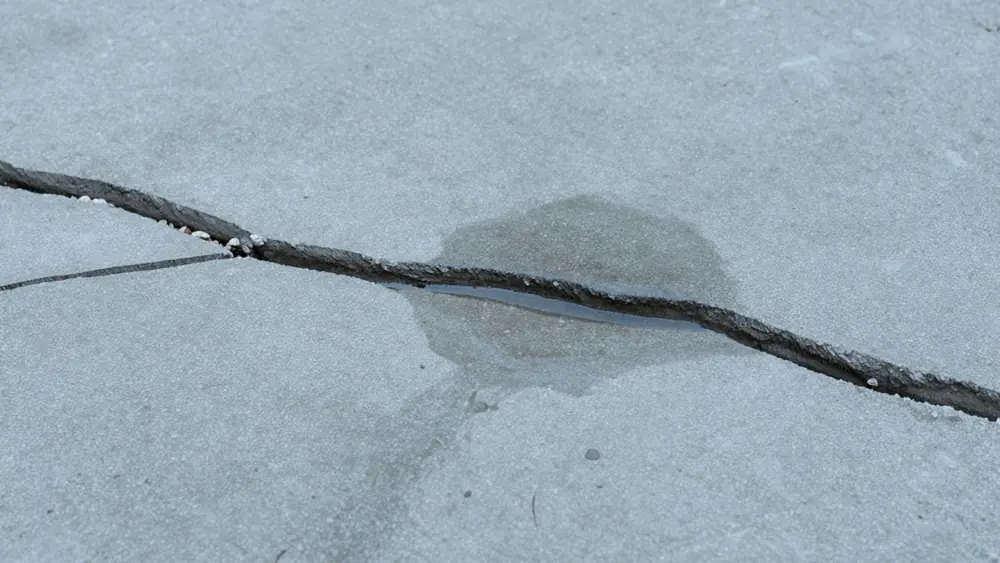
Slab foundations are common across North Texas, and many houses here carry supply lines routed through or beneath the concrete. A line there is hard to see and harder to reach, so a small leak can run for a long time before it shows.
Leaks start for ordinary reasons. Pipes age, fittings corrode, joints separate and pressure pushes on weak spots. The water often spreads sideways through the gap between slab and flooring before it rises at a doorway, a wall base or a seam.
We do not make claims about local soil here. A licensed plumber and, if needed, a foundation professional can speak to what is under your house.
Talk to dispatch
Describe what you see and we will tell you what happens next, in plain words, before any work starts.
Signs the leak may be under the slab
No single sign proves it. Several together tell a stronger story. Use this list to decide when to call a plumber and when to call us.
- A warm area on the floor that does not follow a heating vent, which can point to a hot water line.
- A hissing or running sound when every fixture is off.
- A water meter that keeps moving with everything closed and the main in your home shut off at the house.
- Damp carpet, curling or buckling hardwood, laminate or vinyl planks lifting at the seams.
- Musty odor from a room that should be dry, or mildew at baseboards.
- A crack in the floor or tile with moisture coming up through it.
- Unusually high water bills with no change in use.
First-hour safety and shut-off steps
Slab leaks are different because you may not see the source. Do these things in order.
- Shut every tap and appliance, then watch the meter. If the dial moves, the leak is probably somewhere after the meter.
- Close the main valve at the house. If the meter stops, the leak is on the house side. If it keeps moving, call the city's water and sewer line.
- Photograph damp floors, baseboards and any visible crack before moving furniture.
- Check outlets and the panel. If water is near them, use the callout below.
- Call a licensed plumber or leak-detection company. Call the dispatch line for the water.
Wet floors and electricity
Water that rises through a floor can reach baseboard outlets and the lower part of a panel. Do not stand in standing water near either.
Do not wade through water to reach the panel. When the ground around it is dry, you may switch off the breaker. Sparking or the smell of gas means leaving at once and calling 911 or the utility, then us.
City line, house line and who to call
The Colony Water Utility is the city's supplier. The city owns the line to the meter and the homeowner owns everything after it. If the leak is before the meter, the water and sewer emergency line handles it: 972-625-2741 during business hours and 972-624-4433 after hours.
Leaks after the meter are yours to repair. Repairs that involve the slab may need a permit. Per the city's Building Inspections and Permits department, plumbing repairs need a permit, and so has foundation repair since the start of October 2025. Call 972-624-3100 and ask what your project needs.
How drying works around a slab
Concrete cannot be wrung out. Water in a slab leaves slowly, so we dry what we can reach and monitor the rest. Moisture meters read the flooring and lower walls, and a thermal imaging camera shows cooler wet zones that the eye misses.
Standing water is removed with extraction units. Wet carpet pad is usually discarded. Wet baseboard and the bottom of drywall may be cut away so cavities can dry. Air movers move air across the floor, and LGR or desiccant dehumidifiers take the moisture back out of the air in the room. We keep drying until each material tests dry by its own standard. ANSI/IICRC S500 is the standard worth asking a company about.
Plumbing repair often means breaking the slab or rerouting the line through walls or attic. Dry after the repair, not before, because new water can arrive from an open line until it is fixed.
Will the floor dry in place
Sometimes. Tile on a slab often dries without removal, though grout and the layer under it may stay damp longer. Engineered wood and laminate tend to lift or cup and are often removed.
| Floor type | Typical outcome | Trade-off |
|---|---|---|
| Tile on slab | Often stays, dried in place | Grout and bond layers need monitoring |
| Carpet and pad | Pad usually removed, carpet may be lifted and dried | Depends on how long it was wet |
| Laminate and vinyl plank | Often removed, boards swell at seams | Replacement is common |
| Hardwood | Cupping can follow, drying may save sections | Needs slow, controlled drying |
| Baseboard and lower drywall | Cut above wet line if wicked | Cavity is dried before closing |
What changes the cost
Every slab loss differs, and a quote before inspection is a guess. These are the factors that set the scope.
| Factor | Why it matters |
|---|---|
| How long the leak ran | Longer exposure means more material is wet |
| Floor coverings involved | Carpet, wood, tile and vinyl each need different handling |
| Wall and baseboard wicking | Water moving up walls adds cutting and cavity drying |
| Drying days and equipment | Larger wet areas need more air movers and dehumidifiers |
| Rebuild scope | Replacing flooring and trim is separate from drying |
Ring the dispatch line with what you have found. After we understand the layout of your home we can outline the scope and quote a number you can rely on. Where possible we respond the same day.
Insurance and slab leaks
The Texas Department of Insurance says home and renters policies cover sudden and accidental water damage, and that gradual leaks and seepage are usually excluded along with resulting mold. A leak that ran for months under a slab may be argued as gradual, so describe it honestly and let the insurer decide.
TDI's hidden water damage guidance says to report a problem soon after you first notice it. Photograph the area before repairs, set damaged items aside for the adjuster, and hold your receipts for temporary steps. Whether the policy pays to tear into the slab to reach the pipe is a policy question. Read it or ask your insurer, and do not promise yourself an outcome.
Mistakes to avoid
- Ignoring a high bill because nothing looks wet.
- Pulling up flooring before photographing it.
- Having new floor installed over a floor that has not been checked for moisture.
- Skipping the meter test and guessing at the source.
- Hiring a company to dry the room before the line is repaired.
Related services and areas
If the line failed under pressure and sprayed into walls, our burst pipe water damage page describes that situation. The engineering behind drying is covered on structural drying, and rebuild work after drying is described on water damage repair.
We also serve nearby cities. See Frisco or Lewisville for local details.
Frequently asked questions
If a slab leak shows up late on a Friday, is emergency help available over the weekend in The Colony?
Yes. A floor taking on water does not care about business hours, so the line stays staffed day and night. Same-day response depends on availability. Close the main valve, call a plumber to find the line, and we handle the wet floors.
How do I know the leak is under the slab?
Look for a warm floor spot, a hissing sound, a meter that moves with everything off, or damp flooring without a visible source. These signs together suggest it. Only a licensed plumber or leak-detection company can confirm the location.
Who fixes the line?
A licensed plumber or leak-detection company locates and repairs it. We do not do plumbing. After the line is fixed, or while it is being isolated, we extract water and dry the structure.
Will the floor dry in place?
Some floors can, including tile in many cases. Carpet pad, laminate and vinyl plank are often removed. We check with moisture meters and decide material by material.
Does insurance cover tearing into the slab?
That depends on your policy. Many policies cover sudden and accidental water damage but treat the cost of reaching the pipe differently. Check your policy and ask your insurer before work begins.
Can mold follow a slab leak?
Mold needs moisture, and a hidden leak provides it. The leak must be fixed first, and wet materials must dry. Health questions belong to a physician, and our mold remediation page explains the mold side.